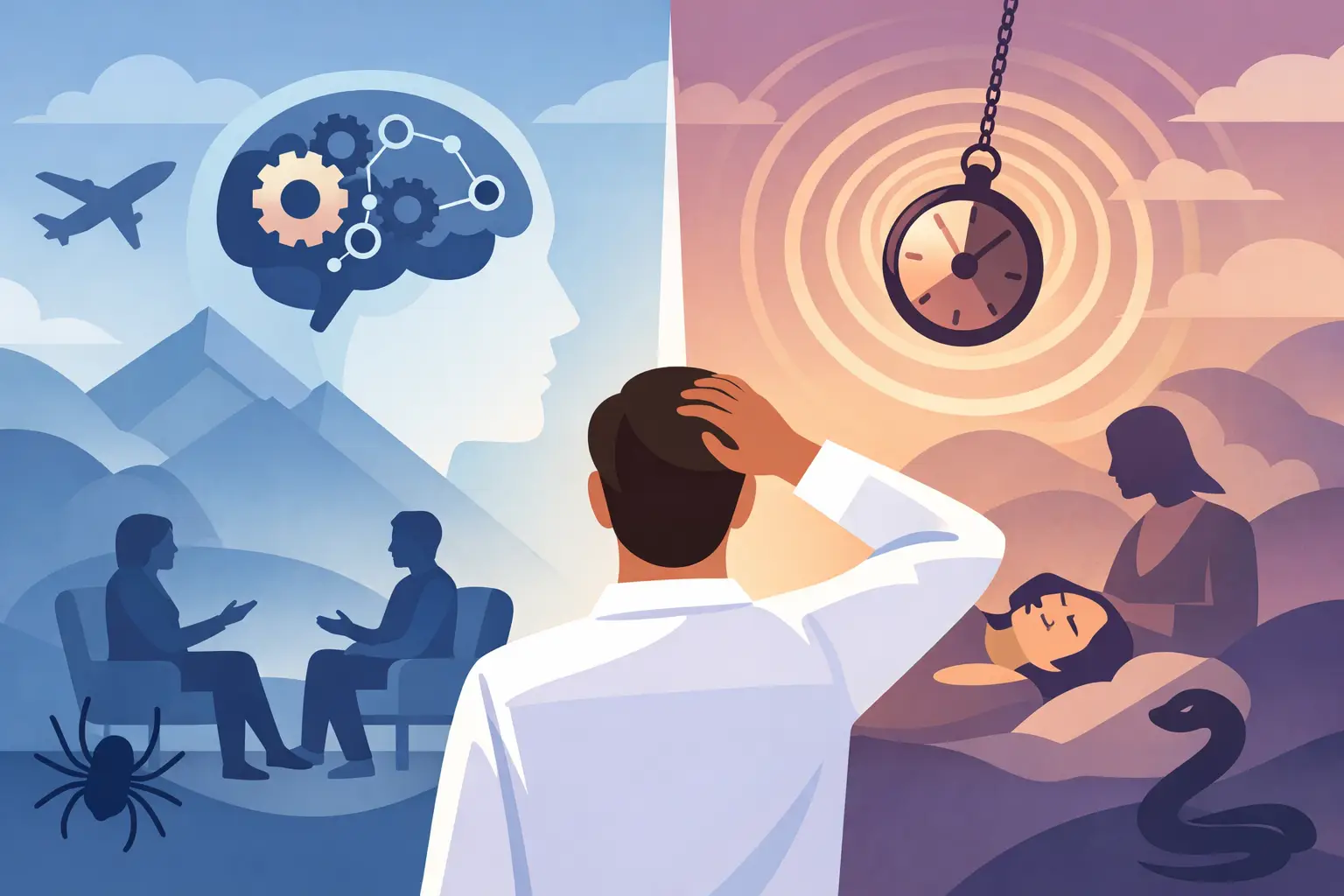
Anxiety can be particularly draining when you appear to be coping well on the outside. You may be meeting deadlines, looking after others and getting through a full working week, while privately living with a constant sense of pressure, overthinking or dread. NLP techniques for anxiety are sometimes used to help people notice how these reactions are being created and practise responding differently.
NLP stands for Neuro-Linguistic Programming. Despite the technical name, the basic idea is straightforward: the words, images, memories and internal habits we use can influence how we feel and what we do next. In therapy, NLP is not about positive thinking or pretending that a real problem does not exist. It is a practical way of examining the patterns that may be keeping anxiety going.
Why anxiety can become a learned pattern
An anxious response is not usually random. Your nervous system is designed to protect you, and it can become highly alert after a difficult experience, a prolonged period of stress, or simply years of putting pressure on yourself. A presentation, train journey, medical appointment or difficult conversation may then start to feel threatening before it has even happened.
When clients visit our practice, they could be feeling physically tense, mentally exhausted and frustrated that they cannot simply reason their way out of it. They may know that a meeting is manageable or that flying is statistically safe, yet still experience a racing heart, nausea, sleeplessness or a strong urge to avoid the situation.
This does not mean they are weak or incapable. It often means the mind has made a quick association between a trigger and danger. Avoiding the trigger can bring short-term relief, but it may also teach the brain that the situation really was unsafe. Over time, the anxiety can become more automatic.
How NLP techniques for anxiety are used
NLP-based work focuses on the details of your experience. Rather than only asking, “Why am I anxious?”, a therapist may help you explore questions such as: What do you picture when the anxiety starts? Is there an inner voice predicting the worst? Where do you feel the response in your body? What happens immediately before you begin to withdraw, check, reassure yourself or over-prepare?
Those details matter because they offer places to intervene. The aim is not to remove every uncomfortable feeling. Some nervousness is appropriate, especially when something matters to you. The aim is to reduce the intensity and automatic nature of the response, so you have more choice in how you act.
Changing the mental rehearsal
Many people with anxiety spend a great deal of time mentally rehearsing what could go wrong. They may see a vivid image of themselves freezing during a presentation, being judged in a meeting or receiving bad news. The image can feel so convincing that the body responds as though the event is already happening.
One NLP approach is to change the qualities of that internal picture. A therapist might invite you to notice whether it is close, large, bright or moving quickly, then experiment with making it smaller, further away or less detailed. This is not a magic trick, and it will not make a genuinely challenging situation disappear. However, it can reduce the emotional charge of an imagined scenario and make space for a more balanced preparation.
Working with the inner voice
Anxiety often comes with a demanding internal commentary: “You will make a fool of yourself”, “You cannot cope”, or “Something is bound to happen”. The content can be familiar, but the tone is often as influential as the words. A harsh, urgent voice tends to create a harsher, more urgent physical response.
NLP work may involve noticing where that voice seems to come from, how quickly it speaks and whose tone it resembles. Adjusting its volume, pace or location can help some people step back from it. From there, it is easier to develop an internal response that is realistic rather than falsely reassuring: “This feels uncomfortable, but I can slow down and take the next step.”
Building a steadier state
Another technique sometimes used is anchoring. This involves deliberately connecting a physical cue, such as gently pressing two fingers together or taking a particular breath, with a remembered state of calm, focus or capability. The cue is practised repeatedly when you are settled, rather than saved for a moment of crisis.
In our practice, we often see clients who have lost touch with the feeling of being composed because anxiety has occupied so much of their attention. Recalling a time when you handled something well – even a small moment – can be a useful starting point. The purpose is not to force calm, but to give your body a familiar route back towards steadiness when pressure builds.
Rehearsing a different response
The mind rehearses anxiety very effectively. Therapy can use that same ability in a more helpful direction. You might imagine arriving at a difficult event, noticing the first signs of tension, using your breathing and cue, then continuing with one manageable action. For someone worried about public speaking, that may be standing up, pausing and saying the first prepared sentence. For someone with travel anxiety, it may be entering the station without immediately turning back.
This kind of rehearsal works best when it is believable. An imagined scene in which you feel completely fearless may not be convincing. A scene in which you feel some nerves but remain present, capable and able to continue is often more useful.
NLP is not a substitute for understanding the wider picture
All people are different, but we see some who may be dealing with anxiety linked to perfectionism, workplace pressure, bereavement, health worries, past experiences or a major life change. Others have a more specific fear, such as flying, driving, social situations or speaking in public. The technique needs to fit the person and the problem.
NLP has a mixed research base, and it should not be presented as a guaranteed treatment for anxiety. Some people find its practical focus on thoughts, imagery and behaviour very helpful; others may benefit more from cognitive behavioural therapy, counselling, medication discussed with their GP, or an integrated approach. Cognitive hypnotherapy can also incorporate NLP-informed methods where appropriate, alongside relaxation and work on the underlying patterns involved.
A careful therapeutic assessment matters. Persistent sleep disruption, panic attacks, low mood, compulsive behaviours, trauma symptoms or heavy reliance on alcohol or drugs can all affect the right course of support. If anxiety is making you feel unsafe, unable to function, or at risk of harming yourself, urgent support through your GP, NHS 111 or emergency services is needed.
Making the work useful between sessions
The value of any technique is usually in how it translates into daily life. It can help to choose one recurring moment – before opening your inbox, on the walk to a meeting, or when lying awake at night – and practise a short response there. Notice the anxious prediction, soften the mental image or inner voice, use a calming cue, and take the next practical action.
Small repetitions are more useful than trying to solve everything at once. You may still feel anxious at times, but you can learn that the feeling does not have to dictate your choices. That gradual shift is often where confidence begins to return.
If you’re based in London and would like to explore this further, you can get in touch with us.