Pain, tightness or an inability to allow penetration can make sex, examinations, tampon use or even the thought of these situations feel overwhelming. If you are searching for the best vaginismus therapy, it is understandable to want one clear answer. In practice, the most helpful treatment is rarely a single technique. It is a careful, personalised approach that addresses the body’s involuntary response as well as the anxiety, expectations and past experiences surrounding it.
Vaginismus is not a failure of willpower, arousal or affection for a partner. The pelvic floor muscles tighten automatically, often in anticipation of pain or threat. That response can become self-reinforcing: discomfort leads to anxiety, anxiety increases muscle tension, and the next attempt feels even more difficult. Effective therapy works to interrupt that cycle without pressure, shame or a requirement to push through pain.
What does the best vaginismus therapy look like?
The best approach begins with understanding what is happening for you, rather than assuming that every person with vaginismus needs the same plan. Some people have always found penetration difficult. For others, the problem begins after a painful experience, an infection, childbirth, a difficult relationship, a medical procedure or a period of high stress. Sometimes there is no obvious starting point at all.
A sensible first step is to speak with a GP, sexual health clinician or gynaecologist where appropriate. They can help rule out or treat physical causes of pain, such as infection, skin conditions, hormonal changes, endometriosis or vulval pain. This does not mean the difficulty is “all physical” or “all psychological”. Pelvic pain and anxiety can affect one another, and both deserve proper attention.
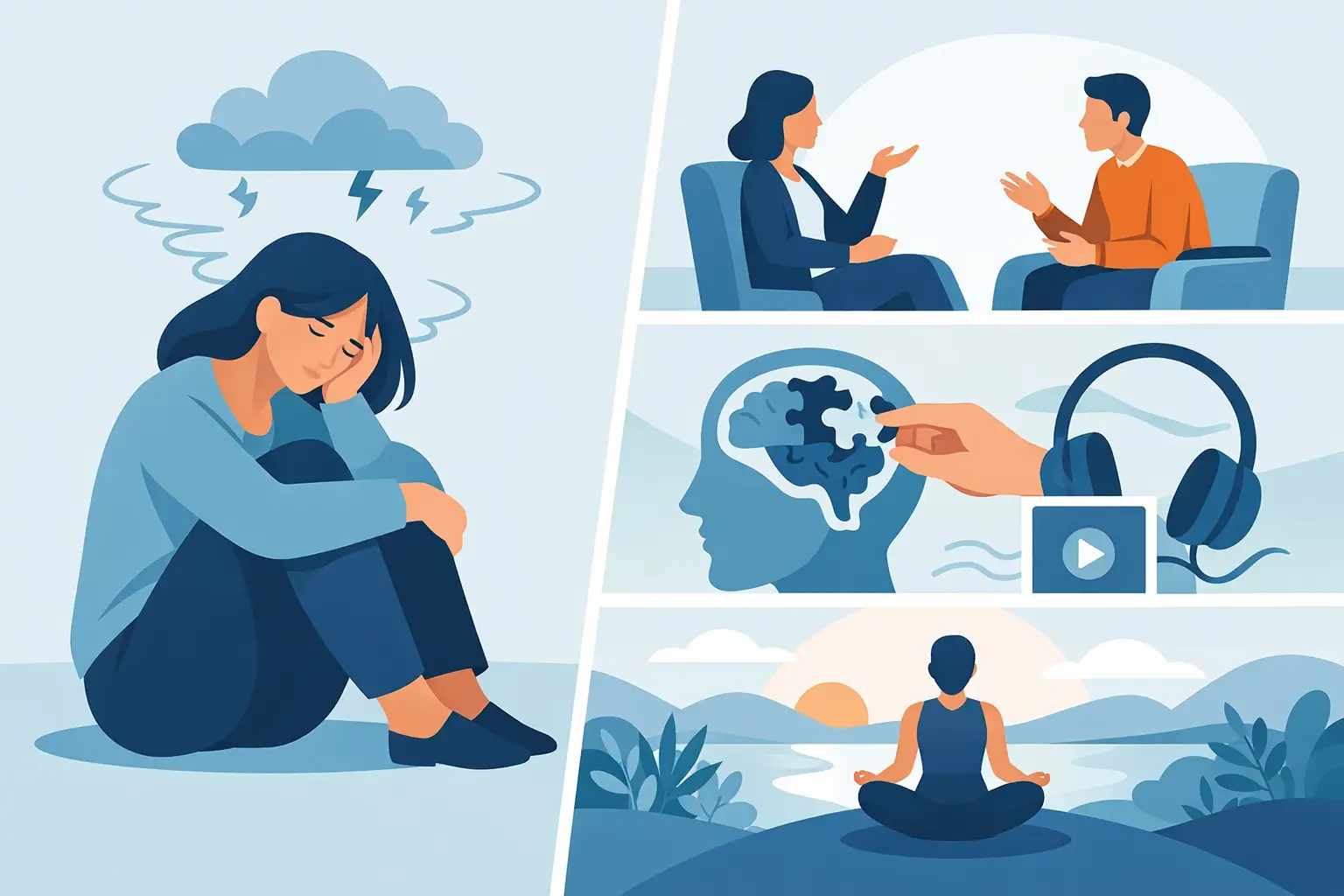
For many people, pelvic health physiotherapy is a valuable part of treatment. A specialist physiotherapist can assess pelvic-floor tension, teach relaxation and breathing techniques, and guide gradual work with dilators if these are appropriate. Dilators are not a test to pass, and they should never be used through pain or because somebody else thinks you ought to. They are one possible tool, used slowly and with consent.
Psychosexual therapy or counselling can also help, particularly where fear, shame, relationship tension or distress around intimacy has become part of the picture. A therapist can help you communicate with a partner, challenge unhelpful expectations and separate intimacy from performance pressure. Penetration does not need to be the measure of a satisfying sexual relationship while you are working through this.
Why anxiety treatment can be relevant
The body’s threat system does not make neat distinctions between a physical threat and an anticipated one. If your mind has learned that penetration, an examination or inserting a tampon may hurt, the nervous system can respond before you have consciously decided how you feel. Muscles brace, breathing becomes shallower and the body prepares to protect itself.
This is where psychological approaches can be useful alongside medical care and physiotherapy. Cognitive hypnotherapy, for example, may help some people reduce the anticipatory anxiety attached to particular situations. Rather than trying to make you ignore pain, the work focuses on changing the learned fear response, building a stronger sense of safety and giving you practical ways to settle your body.
When clients visit our practice, they could be feeling frustrated by advice that sounds simple but has not felt possible in their own body. They may be successful and capable in other areas of life, yet find this one issue hard to discuss or even name. Some have tried to “relax” or persist through discomfort, only to feel more anxious afterwards.
“In our practice, we often see clients who…” have spent years assuming they are alone in this experience. All people are different, but we see some who may be caught between wanting closeness and fearing what their body will do. Making space for both feelings, without judgement, is often an important part of moving forward.
Hypnotherapy is not a replacement for medical assessment or specialist pelvic care. It can, however, be a supportive part of an integrated plan when anxiety, fear or an automatic protective response are maintaining the problem. Sessions should be tailored to your history, goals and comfort level, rather than following a standard script.
A gradual plan is usually more effective than force
Vaginismus treatment tends to work best when progress is paced. Trying to force penetration, setting deadlines, or repeatedly attempting something after your body has signalled distress can strengthen the very association you are trying to change. A slower approach may feel counterintuitive at first, especially if you are eager for a solution, but it often creates more reliable progress.
Your plan might begin with learning to notice tension without criticising yourself for it. It may include breathing exercises, body awareness, relaxation practice and conversations with a partner about what feels safe. Later, it may involve non-penetrative touch, self-directed exploration or graded dilator work under appropriate professional guidance. The order matters less than your sense of choice and safety.
If you are in a relationship, a supportive partner can make a meaningful difference. That does not mean they need to become a co-therapist. It means taking pressure away from a particular outcome, listening carefully and respecting a pause or change of plan. If a partner reacts with impatience, blame or coercion, that is important information to take seriously.
Choosing the best vaginismus therapy for you
Look for practitioners who are clear about their scope of practice. A therapist should welcome collaboration with your GP, gynaecologist, pelvic health physiotherapist or psychosexual therapist where needed. They should not promise a fixed number of sessions, guarantee an outcome or suggest that you must revisit every detail of your past for treatment to help.
It is reasonable to ask how they work, what they would recommend in your circumstances and how progress will be reviewed. You should feel able to say no to any exercise, decide what information to share and ask for explanations in plain language. Therapy is not something done to you. It is a collaborative process.
For some people, a focused course of work on anxiety and confidence around penetration is enough to support progress. For others, particularly where pain is ongoing or there are complex medical, relational or trauma-related factors, a longer and more joined-up plan is likely to be more appropriate. Improvement may not be linear. A difficult week does not erase the progress you have made.
What progress can look like
Progress is not only defined by pain-free penetration. It can include feeling less alarmed by an examination, being able to talk openly with a partner, sleeping better because you are no longer anticipating a problem, or noticing that your pelvic floor can soften when you choose. These changes can make later physical steps feel more manageable.
A useful measure is whether you are gaining more choice. Can you recognise anxiety earlier? Can you slow down without feeling you have failed? Can you approach intimacy with less fear and more communication? These are meaningful signs that the protective cycle is beginning to loosen.
There is no benefit in comparing your pace with anyone else’s. Vaginismus can be treated, and many people find that the right support helps them feel more at ease in their body and in intimate situations. The aim is not to meet somebody else’s expectation. It is to reduce distress and help you make choices that feel comfortable, informed and genuinely your own.
“If you’re based in London and would like to explore this further, you can get in touch with us.”