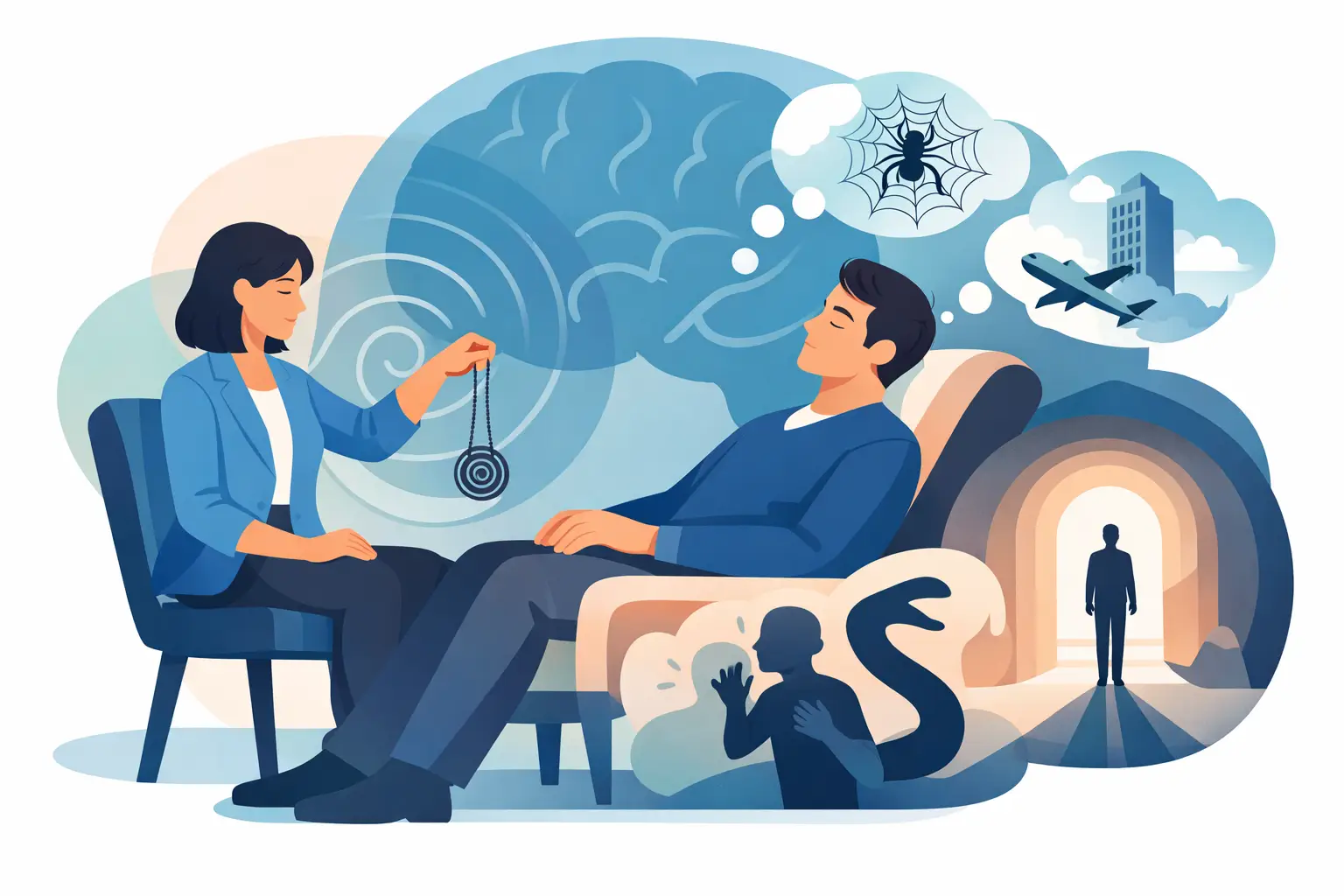
At 3am, anxiety can feel less like a thought and more like a complete system failure. Your body is tired but alert, your mind is rehearsing conversations or catastrophes, and tomorrow’s ordinary demands already feel too much. An anxiety hypnotherapy success story is not usually about someone becoming fearless overnight. More often, it is about becoming able to sleep, think clearly, speak up, travel across London, or get through a demanding working day without the same relentless inner pressure.
When clients visit our practice, they could be feeling outwardly capable while privately exhausted. They may be managing a senior role, caring for children, keeping appointments and answering messages, yet spending much of the day braced for something to go wrong. This type of anxiety is often missed because the person is still functioning. But functioning is not the same as feeling well.
A realistic anxiety hypnotherapy success story
The following is a composite account, based on patterns we commonly see rather than one identifiable client. It reflects the kind of change that can happen when therapy is tailored to the person, their history and the situations that keep anxiety going.
Anna, a London-based professional in her late thirties, came to therapy after several months of poor sleep, racing thoughts and an increasing fear of making mistakes at work. Her role involved regular presentations and difficult decisions. She had always described herself as conscientious, but that conscientiousness had become punishing. Before meetings, she would mentally prepare for every possible question. Afterwards, she replayed what she had said and searched for signs that she had come across badly.
She had tried breathing exercises, podcasts and talking herself through the facts. Some of these helped briefly. The difficulty was that her reaction did not feel logical in the moment. A calendar invitation, a message from a manager or a slightly delayed reply from a colleague could trigger a surge of tension before she had consciously decided there was anything to fear.
Her goal was not to become indifferent to work or never feel nervous. She wanted to stop treating every piece of uncertainty as an emergency. She wanted more settled sleep, less physical dread before meetings and enough mental space to enjoy evenings with her partner.
Why anxiety can persist despite insight
Many people with anxiety understand that their fears are disproportionate. They may be highly self-aware and able to explain exactly where the pattern began. Yet insight alone does not always change an automatic response in the body.
Anxiety can be maintained by a cycle of anticipation, physical tension, avoidance and self-criticism. For example, avoiding a presentation may provide immediate relief, but it can also teach the mind that presentations were dangerous enough to escape. Reassurance-seeking can work in much the same way. It calms the anxiety temporarily, while making it harder to tolerate uncertainty independently next time.
Hypnotherapy is not about someone taking control of your mind, nor is it a state in which you are unconscious. In a therapeutic setting, hypnosis is a focused, relaxed state in which you remain aware and able to respond. It can help us work with habitual emotional responses, unhelpful associations and the internal language that fuels anxiety.
For some clients, cognitive hypnotherapy is particularly useful because it combines hypnotic work with practical conversation, imagery and techniques drawn from approaches such as NLP and EFT. The work is not identical for everyone. A person whose anxiety is connected to a specific fear may need a different approach from someone whose symptoms are tied to burnout, perfectionism, IBS or longstanding low confidence.
What changed in the sessions
With Anna, the early work focused on understanding her individual anxiety pattern. We explored when the physical symptoms began, what she predicted would happen in high-pressure situations, and the rules she felt she had to live by. One of those rules was that being prepared meant anticipating every possible problem. Another was that any visible nervousness would expose her as inadequate.
In our practice, we often see clients who have spent years trying to outthink anxiety. Their minds are quick, analytical and constantly scanning for a solution. Therapy gives that effort a more useful direction: recognising the pattern, reducing the alarm response and practising a different response before the familiar trigger takes over.
Hypnotic relaxation was used to help Anna experience her body settling without needing to solve every thought first. We then worked with imagined work situations in a calm, focused state. Rather than picturing a flawless performance, she rehearsed more realistic outcomes: pausing to gather her thoughts, answering a question imperfectly, noticing a blush or a faster heartbeat and continuing anyway.
This distinction mattered. The aim was not to guarantee that she would never feel anxious. It was to reduce the meaning she gave to the sensation. A racing heart became a sign of activation, not proof that she was about to fail.
She also used short exercises between sessions. These were not lengthy routines added to an already crowded day. They included a brief settling practice before work, noticing and questioning catastrophic predictions, and using a cue developed in therapy to return her attention to the present. Repetition outside the consulting room helps turn therapeutic insight into something more available in daily life.
Progress was gradual, not perfect
After several sessions, Anna noticed that her sleep was less disrupted. She still woke occasionally, but she was no longer spending hours in a spiral of planning and worry. Before presentations, she felt nervous but did not cancel or over-prepare to the same extent. She began to contribute more naturally in meetings because she was listening rather than monitoring herself.
There were difficult weeks. A demanding deadline brought back some old habits, and she noticed the urge to seek reassurance. That did not mean the therapy had failed. It gave her an opportunity to use the tools in a situation that genuinely mattered. Over time, recovery after a stressful event became quicker.
All people are different, but we see some who may be surprised that success looks quieter than they expected. They describe more ordinary days. They stop avoiding a journey, send the email without rewriting it six times, fall asleep without checking the clock, or enjoy a weekend without mentally preparing for Monday. These changes can be significant because anxiety had been taking up so much internal space.
What a success story does and does not prove
A positive account can be encouraging, particularly when anxiety has made you doubt that anything will help. However, it should not be treated as a promise. The pace and extent of progress depend on the nature of the anxiety, how long it has been present, current stress levels, previous experiences and whether there are other issues requiring support.
Some people respond well within a relatively focused course of sessions. Others need longer-term work, especially where anxiety is linked with trauma, depression, compulsive behaviours, chronic pain or significant relationship difficulties. Hypnotherapy may be used alongside other support, including talking therapy or medical care. If symptoms are severe, worsening, or include thoughts of harming yourself, urgent support through a GP, NHS service or emergency route is appropriate.
A good therapeutic relationship also matters. You should feel able to ask how the approach will be adapted to you, what happens in a session and how progress will be reviewed. There is no benefit in pretending that every technique suits every person. The purpose of a tailored approach is to find practical ways forward without forcing a fixed formula onto your experience.
Looking for a steadier way to respond
Anxiety often persuades people that they must wait until they feel completely confident before they can live more freely. In practice, confidence usually grows through small experiences of coping differently. The first calmer meeting, the first uninterrupted night, or the first journey taken without an escape plan can begin to alter what feels possible.
If you are considering hypnotherapy, it can help to arrive with a simple question: what would be different in daily life if anxiety took up less room? The answer may be practical, personal and modest. That is often where meaningful work begins.
“If you’re based in London and would like to explore this further, you can get in touch with us.”