If you have been looking into support for anxiety, confidence, habits or stress, you may have noticed two approaches appearing again and again: NLP and hypnotherapy. The question behind most searches for nlp vs hypnotherapy differences is usually quite practical – which one is likely to help me feel better, think more clearly, and change the pattern that keeps repeating?
That is the right question to ask. People rarely come to therapy because they want a theory lesson. They want help with the thing that is disrupting sleep, work, relationships or peace of mind. When clients visit our practice, they could be feeling tense, mentally overactive, flat, stuck in old habits, or simply tired of managing the same issue with willpower alone.
NLP vs hypnotherapy differences at a glance
The simplest way to understand NLP vs hypnotherapy differences is this: NLP tends to focus on how you structure thoughts, language and behaviour in the present, while hypnotherapy uses focused relaxation and therapeutic suggestion to work with deeper patterns, emotional responses and automatic habits.
That is a useful starting point, but real therapy is usually more nuanced than that. Both can be used to help with anxiety, fears, confidence, performance pressure and unwanted habits. Both aim to create change. The difference often lies in how that change is approached, how sessions feel, and what sort of client response is needed.
What NLP is
NLP stands for Neuro Linguistic Programming. In plain terms, it is a method that looks at the link between thoughts, language, internal imagery, emotional states and behaviour. It often involves noticing how you represent an experience in your mind and then changing that structure to produce a different response.
For example, if someone feels a surge of anxiety before speaking in meetings, NLP might explore the internal picture or self-talk attached to that moment. By changing the way the experience is coded mentally, the emotional charge can begin to shift. This can be especially appealing to people who want a practical, active process.
What hypnotherapy is
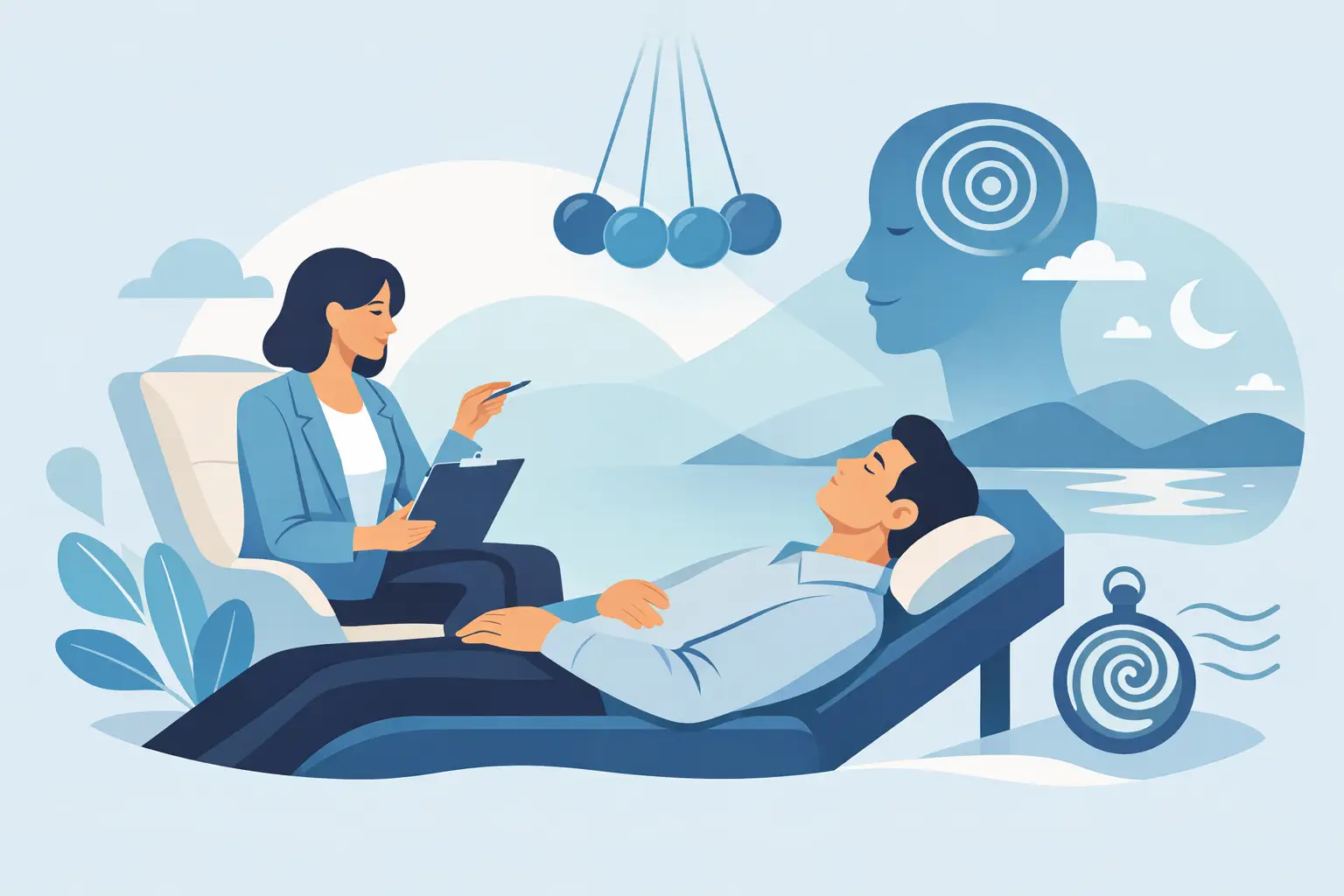
Hypnotherapy uses hypnosis as part of a therapeutic process. Hypnosis is not sleep or unconsciousness. It is a state of focused attention in which the mind is often more receptive, less distracted and better able to engage with helpful suggestions, imagery and therapeutic reframing.
In hypnotherapy, the aim is not simply to relax you, though relaxation may be part of the process. The aim is to help reduce resistance to change and work with patterns that do not always respond well to logic alone. This is why it can be so useful for issues such as smoking, phobias, sleep problems, IBS, compulsive habits and long-standing anxiety.
How do sessions actually feel?
This is often where the difference becomes clearer for clients.
NLP sessions can feel more conversational and structured. You may be asked specific questions about what you say to yourself, what you imagine, or what happens internally just before the unwanted feeling begins. Some techniques are quite focused and brief. Others involve rehearsal, reframing or building a stronger internal response to a challenge.
Hypnotherapy sessions often include talking too, but they usually move into a more inward, absorbed state. You are guided rather than passive. Most people remain aware of what is being said. Many describe it as feeling calm, mentally quieter and less tangled up in their usual reactions.
Neither experience is inherently better. It depends on the issue and the person. Some clients like the clear, practical style of NLP. Others respond more readily when the nervous system settles and deeper work becomes possible.
Conscious change versus deeper automatic patterns
One of the most useful distinctions is that NLP often works very well with patterns you can identify clearly. If you know what triggers the problem, can describe your internal dialogue, and want tools you can apply quickly, NLP may be a good fit.
Hypnotherapy can be particularly effective where the pattern feels more automatic, irrational or emotionally embedded. You may know perfectly well that flying is statistically safe, that one cigarette leads to twenty, or that your body does not need to go into panic before every presentation. Yet knowledge alone does not change the response. That is often where hypnotherapy has an advantage.
In our practice, we often see clients who have already tried to reason with themselves for months or years. They are intelligent, capable and fully aware that the fear, habit or tension no longer makes sense. What they need is not more information, but a way to shift the underlying response.
Where NLP and hypnotherapy overlap
The comparison is not always a strict either-or. There is a considerable overlap between the two approaches, especially in modern integrative practice.
Both may use visualisation, future rehearsal, language patterns and work on emotional triggers. Both can help a person feel more in control. Both can support change in confidence, behaviour and state management. And both tend to work best when tailored to the individual rather than applied mechanically.
This matters because many people arrive expecting a single technique to solve everything. In reality, all people are different, but we see some who may be analytical and responsive to structured NLP tools, while others benefit more from the depth and calm of hypnosis. Some need both.
Why many therapists combine them
A skilled therapist may use NLP within hypnotherapy, or hypnotherapy alongside NLP, because each can support the other. NLP can give a client clear language and practical tools for use outside sessions. Hypnotherapy can help the mind and body absorb change at a level that feels less effortful.
For example, someone with work stress and insomnia may benefit from NLP strategies to interrupt spiralling thought patterns, alongside hypnotherapy to reduce physical arousal and improve sleep readiness. A client with a public speaking fear might use NLP to build a more resourceful internal state and hypnotherapy to reduce anticipatory anxiety.
That integrative approach is often more realistic than arguing about which method is superior in general. The better question is which method, or combination, fits your presenting problem, your temperament and your goals.
Which is better for anxiety, habits and confidence?
For anxiety, it depends on the form it takes and your timeline. NLP typically requires 5-10 sessions and works well if your anxiety is driven by repetitive thinking, performance pressure or specific triggers you can identify. Hypnotherapy typically takes 3-6 sessions and may offer quicker relief if anxiety feels deeply physical, habitual or hard to switch off, because it works directly with state change and automatic responses.
For habits such as smoking, nail biting or stress eating, hypnotherapy is often preferred because habits tend to run below conscious decision-making, NLP works with the conscious triggers and motivation, while hypnotherapy addresses the automatic response. That said, the most effective approach often combines both: NLP to identify triggers and strengthen motivation, hypnotherapy to reduce the automatic pull toward the habit.
For confidence, both can work well. NLP may help you reframe internal dialogue and create a stronger mental strategy. Hypnotherapy may help reduce the deeper emotional charge around failure, judgement or visibility. If your confidence issue is tied to a particular event or pattern from earlier life, hypnotherapy may allow more depth.
Common misconceptions
Some people assume NLP is more scientific because it sounds technical, or that hypnotherapy is less serious because it is associated with stage hypnosis. Neither assumption is especially helpful.
Good therapy is not about sounding impressive. It is about whether the method is applied thoughtfully, ethically and in a way that makes sense for the person in front of you. A rushed or formulaic approach will be limited whatever it is called.
Another misconception is that hypnotherapy means giving up control. In clinical work, that is not the aim. You remain aware and you cannot be made to do something against your values. The process is collaborative. In many cases, people feel more in control afterwards because their reactions are no longer running the show.
How to choose the right approach
If you are deciding between the two, it helps to ask a few honest questions. Does your issue feel mainly cognitive, where changing thought patterns and internal language might be enough? Or does it feel deeper in the body, more emotional, more habitual, or more resistant to logic?
It also helps to consider what kind of support you respond to. Some people want practical tools and direct techniques. Others need space to settle, process and engage more deeply. Often the most effective work does not come from choosing a label, but from choosing an experienced therapist who can assess what is needed.
At City of London Hypnotherapy, this is one reason we value an individualised approach. A person with burnout, IBS or a specific phobia is not simply a diagnosis. They come with their own history, stress load, coping style and goals. The therapy should reflect that.
If you are weighing up NLP and hypnotherapy, you do not need to get the theory perfect before seeking help. What matters is finding an approach that respects the complexity of your problem without making it more complicated than it needs to be.
“If you’re based in London and would like to explore this further, you can get in touch with us.”
FAQs
Does hypnotherapy work faster than NLP?
Hypnotherapy often produces quicker results for specific issues because it works directly with automatic responses and emotional patterns without requiring conscious effort. NLP typically takes longer because it requires active engagement and practice to reprogram thoughts and behaviour patterns.
Can you combine NLP and hypnotherapy, or do you have to choose one?
You can absolutely combine both, many therapists use them together because each strengthens the other. NLP provides practical conscious tools and language patterns; hypnotherapy helps the deeper emotional work integrate and stick by quieting mental chatter and allowing new patterns to settle in the body.
Which approach is better for phobias or deep-seated fears?
Hypnotherapy typically works faster for phobias because it goes directly to the root cause in the unconscious mind and addresses the automatic fear response. NLP can help too, but for phobias you’re usually better starting with hypnotherapy, then potentially adding NLP skills for ongoing confidence.
Will I be passive and lose control in hypnotherapy, while NLP keeps me active?
In clinical hypnotherapy, you remain fully aware and in control, you’re guided, not passive. The difference is that in NLP you consciously apply techniques; in hypnotherapy, your nervous system settles so change can happen without effort. Both require collaboration, just in different ways.
If I’ve already tried one approach and it didn’t fully work, should I try the other?
Yes, often the combination works better than either alone. If NLP gave you tools but didn’t address the emotional charge, hypnotherapy can help settle that. If hypnotherapy created calm but you still struggle with trigger situations, NLP gives you practical techniques for those moments.