You can look perfectly capable on the outside and still feel as though your mind never quite switches off. For many people, stress and anxiety relief activities are not about becoming a different person. They are about creating enough space in the day for your body to stand down, your thoughts to slow, and your attention to return.
When clients visit our practice, they could be feeling tense before they have even opened their laptop, irritable on the commute, unable to sleep despite exhaustion, or strangely flat after weeks of pushing through. In London especially, stress can become normalised because everyone seems busy, switched on and slightly overextended. The difficulty is that your nervous system does not care how common that state is. If it stays on alert for too long, symptoms tend to spread into sleep, digestion, concentration, mood and confidence.
Why stress and anxiety relief activities work
Not every activity helps in the same way. Some reduce physical arousal quite quickly, while others help discharge pent-up energy or interrupt repetitive thinking. The most useful starting point is to stop treating stress as purely mental. Anxiety often has a physical rhythm – shallow breathing, muscle tension, scanning for problems, racing thoughts – and that rhythm can be influenced from the body upwards.
That is why simple practices can be more effective than people expect. They are not trivial. They give your system a different instruction. Rather than asking yourself to think positively when you feel overwhelmed, you are creating conditions in which calm becomes more possible.
All people are different, but we see some who may be highly analytical and frustrated by vague advice. If that sounds familiar, it may help to think less in terms of self-care and more in terms of regulation. You are not trying to perform relaxation. You are helping your mind and body return to a steadier baseline.
Stress and anxiety relief activities that genuinely help
1. Slow breathing with a longer exhale
If anxiety rises quickly, breathing exercises can sound almost too simple. Yet one of the fastest ways to signal safety to the nervous system is to lengthen the exhale. You might breathe in for four and out for six, or in for three and out for five. It does not need to be exact.
The reason this works is practical rather than mystical. A longer exhale encourages the body to move away from a fight-or-flight state. If counting makes you more self-conscious, simply focus on making the out-breath softer and slower than the in-breath.
2. Walking without constant input
A short walk can help, but the detail matters. Walking while checking emails, listening to news and mentally rehearsing tomorrow’s problems is not especially restorative. A more useful version is ten to twenty minutes with reduced input, noticing the rhythm of your steps, the temperature of the air, or the feeling of your feet meeting the ground.
This is particularly helpful for people whose anxiety shows up as mental overdrive. Movement gives the body somewhere to put activation. Attention to the environment interrupts the loop of internal pressure.
3. A deliberate muscle release practice
Many people are carrying stress in the jaw, shoulders, chest, stomach or hands without realising how constant it has become. A brief progressive release practice can expose that pattern. Tense one area for a few seconds, then let it go fully. Work gradually from head to toe.
In our practice, we often see clients who have become so used to living in tension that relaxation feels unfamiliar at first. That is very common. Sometimes the first step is not feeling calm straightaway, but recognising how much strain has been there in the background.
4. Writing to offload, not to analyse
Journalling is often recommended, but it is not always helpful if it turns into pages of rumination. A better approach for stress is an offload. Write down everything that feels unfinished, pressing or noisy in your mind. Then separate it into what needs action, what can wait, and what is outside your control.
This can be surprisingly containing. Anxiety thrives on vagueness. When concerns are externalised, they often become more manageable and less dominant.
5. Repetitive, absorbing tasks
There is a reason people often feel calmer after cooking, gardening, knitting, tidying a cupboard or doing a jigsaw. Repetitive tasks can settle the mind because they ask for enough attention to anchor you, but not so much that they create more pressure.
For high-functioning professionals, this can feel oddly difficult because unstructured activity may seem unproductive. Yet if your system has been running hard all day, a low-stakes, absorbing task can be exactly what helps your mind decelerate.
6. Changing your sensory environment
Stress is not only internal. Noise, bright screens, constant alerts and lack of natural light all place demands on the nervous system. One useful activity is to create a short sensory reset at home or at work. Dim the lights slightly, silence notifications, step away from the screen, wash your hands in warm water, or sit somewhere quieter for five minutes.
This is not about creating perfect conditions. It is about reducing load. If your body is already overstimulated, even small environmental changes can have a noticeable effect.
7. Gentle exercise that does not push you harder
Exercise can help anxiety, but there is a trade-off. Intense training may suit some people, especially if they feel agitated and need a strong physical release. For others, particularly those who are already depleted, hard exercise can feel like another demand. On those days, stretching, yoga, swimming or a steady cycle may regulate you better than pushing through a punishing session.
The question is not whether movement is good in theory. It is what your system needs today.
8. Talking to one safe person
Anxiety often becomes louder in isolation. Speaking to someone steady and non-judgemental can reduce pressure very quickly, especially if you are used to holding everything together. This does not mean seeking reassurance repeatedly. It means allowing yourself to be honest about what is happening rather than performing competence.
Sometimes a brief, grounded conversation is enough to stop your thoughts spiralling. Being understood can help your body settle in a way that solitary coping does not.
9. Guided relaxation or hypnosis audio
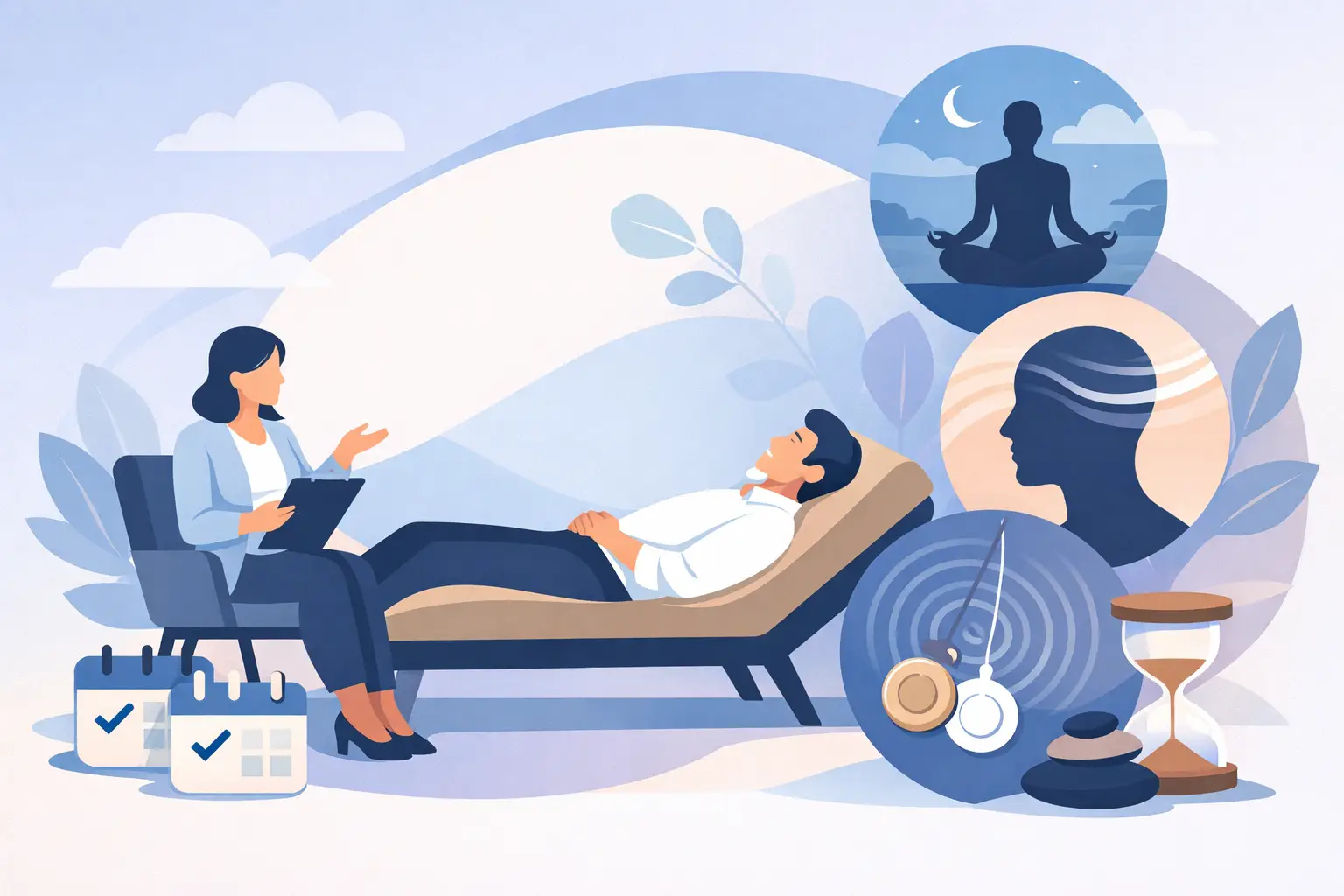
Many people struggle to relax on command because the mind resists silence. A guided audio can help by giving attention somewhere safe to rest. This is one reason therapeutic relaxation and hypnosis recordings can be useful outside sessions. They offer structure, repetition and a familiar route into a calmer state.
For some, audio works best at the end of the day. For others, it is more helpful before a stressful meeting, after work, or during periods of poor sleep. It depends on the pattern of your anxiety and when your mind tends to speed up.
10. Doing one thing slowly on purpose
If stress has made your whole day feel accelerated, choose one ordinary activity and do it at a slower pace than usual. Make tea without multitasking. Shower without rushing. Eat lunch sitting down rather than answering messages. This can sound minor, but it challenges the internal command to keep speeding up.
Over time, these moments matter because they teach your system that not everything is urgent. That message is often missing when anxiety has become habitual.
When activities help, and when they are not enough
Relief activities can be genuinely effective, but they are not always sufficient on their own. If stress is tied to panic, persistent insomnia, IBS symptoms, phobias, compulsive habits, or a long-standing sense of dread, it may point to a deeper pattern rather than a temporary overload. In those cases, techniques help best when they sit alongside focused therapeutic work.
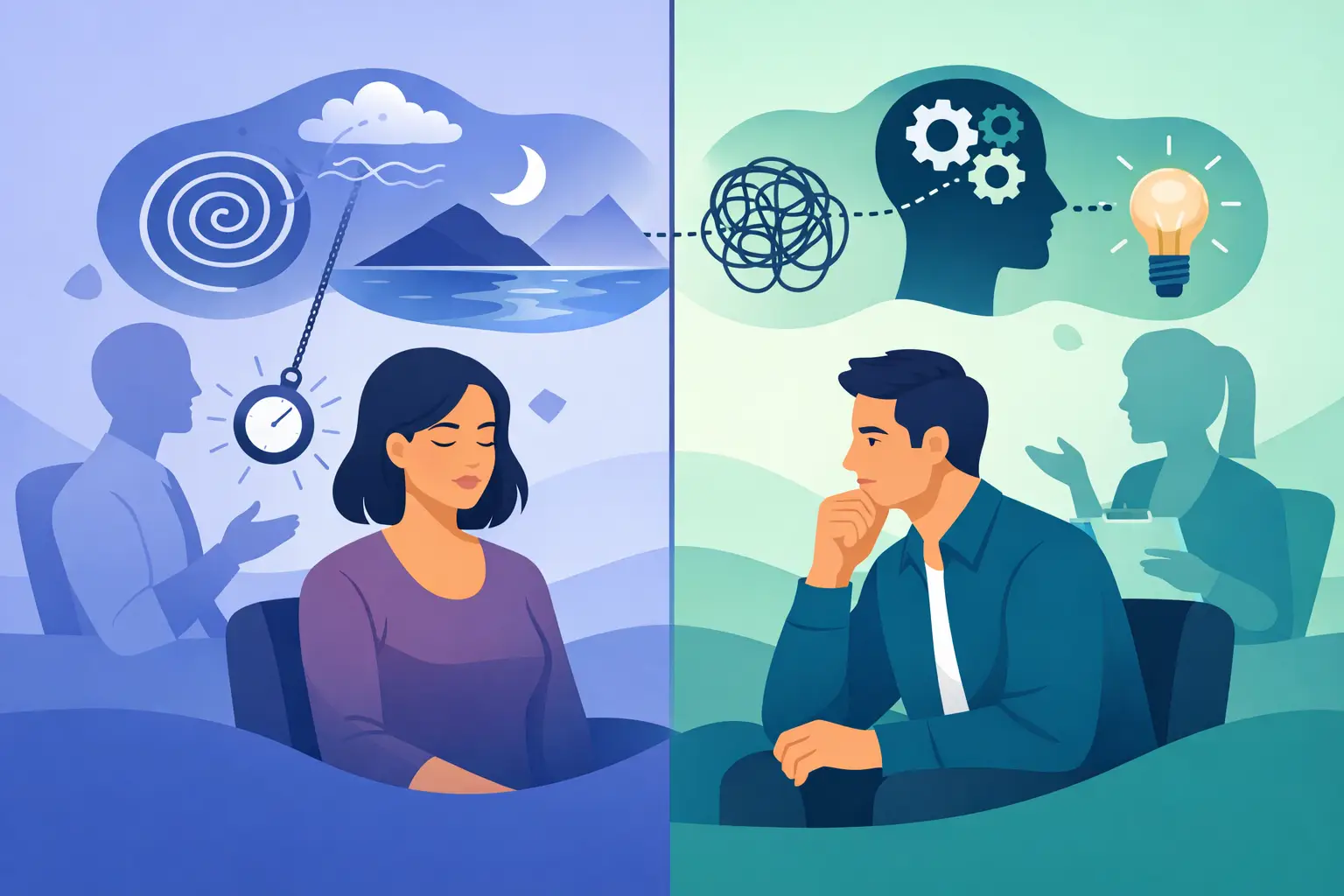
That is often where tailored support makes the difference. Rather than giving everyone the same advice, we look at how anxiety is operating for that individual – what triggers it, how it is maintained, what the body is doing, and which approaches are likely to work in real life. Cognitive hypnotherapy, relaxation work and practical tools can be helpful when generic coping strategies have only gone so far.
A useful question to ask yourself is not simply, “What calms me down?” but, “What keeps setting this off?” If the same symptoms return despite your best efforts, the issue may be less about trying harder and more about addressing the pattern at its source.
There is nothing weak about needing more than a breathing exercise and an early night. Sometimes stress is situational and settles with rest, boundaries and better routines. Sometimes anxiety has become more ingrained, and the most sensible step is proper support.
If you’re based in London and would like to explore this further, you can get in touch with us.