If you are exhausted but still wide awake at 2am, you already know that sleep advice can feel oddly unhelpful. People tell you to switch off your mobile phone, drink less coffee, or try to relax, as if the problem were simply poor habits. For many adults, especially those juggling demanding work, family life, and a mind that struggles to switch off, a guide to insomnia hypnosis needs to go further than that.
Insomnia is rarely just about sleep. More often, it is about what happens around sleep – the pressure to get enough of it, the frustration of lying awake, the dread of another foggy day, and the pattern of tension that builds night after night. That is why hypnosis can be useful. Not as a trick to knock you out, but as a way of changing the mental and physical state that keeps sleep out of reach.
What insomnia hypnosis is really for
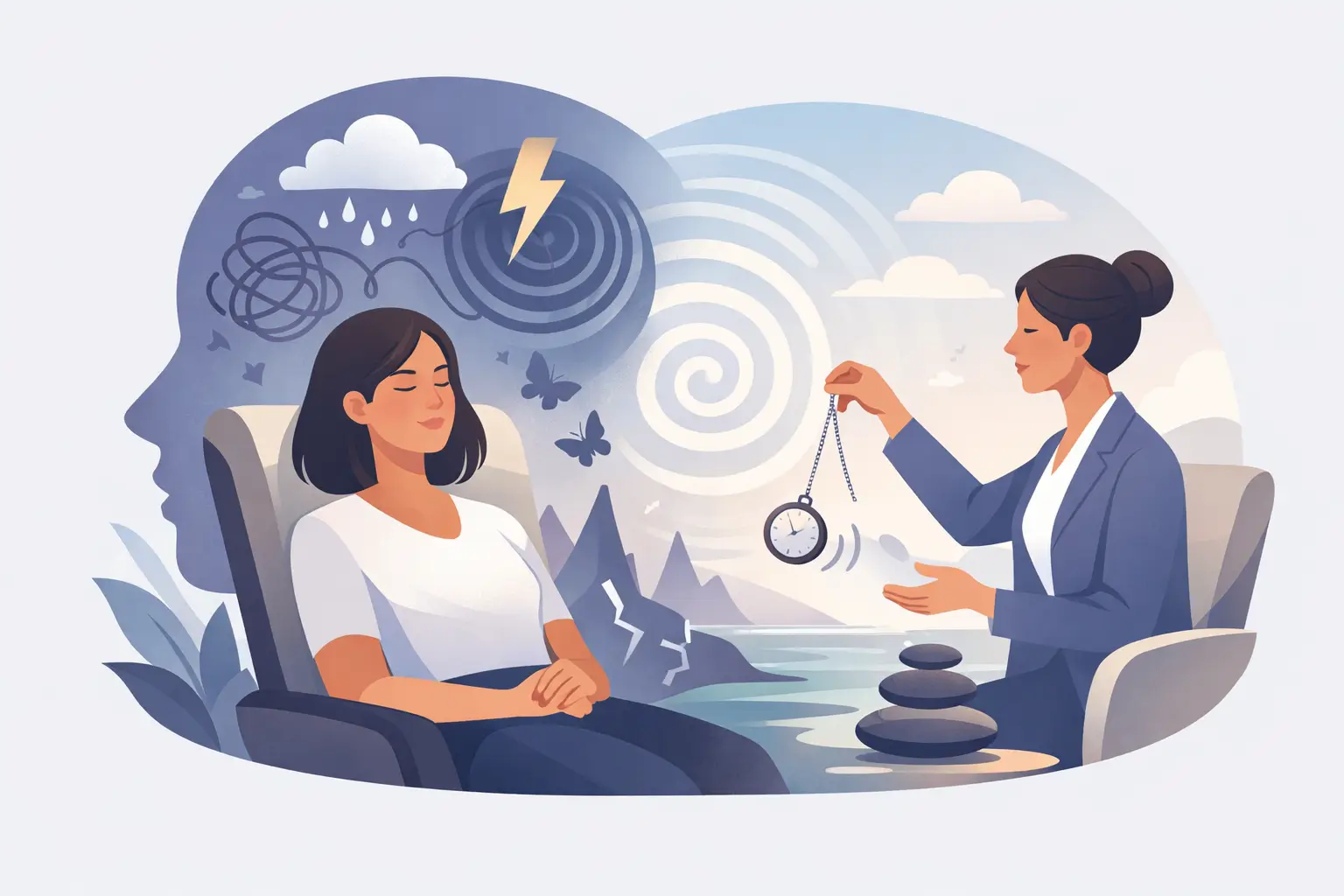
A good guide to insomnia hypnosis should start with a clear point – hypnotherapy is not the same as being made unconscious, and it is not mind control. In therapeutic practice, hypnosis is a focused, relaxed state in which the mind is often more receptive to helpful suggestions, emotional shifts, and new patterns of response.
For insomnia, that matters because many people are not kept awake by noise or light alone. They are kept awake by anticipation, mental overactivity, bodily tension, or a learnt association between bed and struggle. Once that pattern is established, even a quiet bedroom can start to feel like a place where sleep fails to happen.
Hypnosis aims to interrupt that cycle. It can help reduce physiological arousal, soften racing thoughts, and change the way the mind responds to bedtime. In some cases, it also helps with the underlying issue driving the sleep problem, whether that is anxiety, stress, burnout, grief, or a persistent habit of overthinking.
Why some people stay stuck in the cycle
When clients visit our practice, they could be feeling worn down, irritable, and quietly panicked about how little sleep they are getting. Some are functioning well on the surface – going to work, attending meetings, getting through the week – but underneath, they feel brittle and overwhelmed. Others have reached the point where bedtime itself causes anxiety.
This is a common pattern. One poor night leads to worry about the next. Then the bed becomes linked with effort, clock-watching, and frustration. The harder someone tries to force sleep, the more alert they become. It is not a lack of discipline. It is a nervous system caught in the wrong gear.
All people are different, but we see some who may be carrying high levels of pressure for a long time before sleep starts to suffer. For others, insomnia begins after a specific event such as illness, a difficult period at work, relationship stress, or a loss. Even when the original trigger fades, the sleep problem can remain because the mind has learnt the pattern.
How insomnia hypnosis may help
Hypnosis tends to work best when it is used purposefully rather than as a vague relaxation exercise. Relaxation can be part of it, but treatment is usually more specific than that.
A therapist may help you learn how to settle the body before bed, reduce anticipatory anxiety, and respond differently when you wake in the night. There may also be work around the beliefs that have developed about sleep, such as fear of not coping the next day or the sense that you have lost control. If those beliefs are left untouched, they often keep the cycle going.
In our practice, we often see clients who… have tried the obvious things already. They may have read about sleep hygiene, cut back on caffeine, bought blackout curtains, and downloaded meditation apps, yet the problem persists. That does not mean they are beyond help. It often means the issue sits deeper than routine alone.
Hypnotherapy can also be combined with complementary approaches. Cognitive hypnotherapy, for example, looks at how thoughts, beliefs, emotions, and learnt responses work together. Techniques drawn from NLP or EFT may also be used where appropriate, particularly if stress responses are strong or a specific trigger is involved. The point is not to apply a standard script. It is to understand what is maintaining your insomnia and work with that.
What a session may involve
People are often relieved to find that hypnotherapy for sleep is straightforward and collaborative. You would usually begin by talking through what is happening – how long the insomnia has been present, whether you struggle to fall asleep, stay asleep, or wake too early, and what seems to make things worse.
That part matters. Someone who lies awake with a busy mind may need a different approach from someone whose sleep was disrupted after a stressful event. A person with IBS-related sleep disturbance, for instance, may benefit from work that includes both stress regulation and symptom-focused hypnotherapy. Someone dealing with burnout may need support around nervous system recovery and unrealistic internal pressure.
The hypnosis itself is usually calm and structured. You remain aware, and you are not asleep. Most people describe it as a pleasant state of absorbed relaxation. From there, the therapist can introduce tailored suggestions, imagery, or therapeutic work designed to reduce arousal and create a different relationship with sleep.
You may also be given practical tools to use outside the session. This could include a relaxation audio, a short wind-down exercise, or a way of responding to unhelpful thought loops at night. The best results often come when the work in session is reinforced between appointments.
What insomnia hypnosis can and cannot do
It is worth being realistic here. Hypnosis is not a magic switch, and it should not be presented as one. Some people notice a shift quickly, especially when insomnia is linked to recent stress and the nervous system responds well to relaxation-based work. Others need longer, particularly if sleep problems have been entrenched for years or tied to more complex anxiety patterns.
It also depends on what else is going on. If there are medical issues, significant depression, substance use, hormonal changes, or medication effects involved, those factors need proper consideration. Good therapy does not ignore that. It works alongside reality rather than pretending every sleep difficulty has the same cause.
What hypnosis can do well is help remove the struggle that surrounds sleep. That alone can be a major relief. Once the fear, effort, and hypervigilance reduce, the body often has more room to do what it already knows how to do.
Is it suitable for everyone?
Many people can benefit from insomnia hypnosis, but suitability should always be judged individually. If your sleep problem is tied to anxiety, chronic stress, overthinking, performance pressure, or learnt sleep-related fear, hypnotherapy may be worth considering. It can also suit people who want a more personalised approach after finding generic advice too superficial.
If, however, your sleep has changed suddenly and significantly without a clear reason, or there are symptoms that suggest a medical condition, it is sensible to have that checked. Therapy should not replace appropriate medical input.
For some clients, the value of hypnotherapy lies not only in better sleep but in feeling more in control again. Insomnia can make capable people feel surprisingly fragile. The right therapeutic work can help restore a steadier sense of confidence, both at night and during the day.
A calmer way to think about the next step
If sleep has become a battleground, it helps to stop asking, “How do I make myself sleep tonight?” and start asking, “What is keeping my system so alert?” That shift is often where useful work begins. Sleep tends to return more naturally when the mind no longer treats bedtime as a test to pass.
A thoughtful guide to insomnia hypnosis should leave you with something realistic – not the promise of perfect sleep, but the possibility of changing the pattern that keeps you stuck. For many people, that is the difference that matters.
If you’re based in London and would like to explore this further, you can get in touch with us.