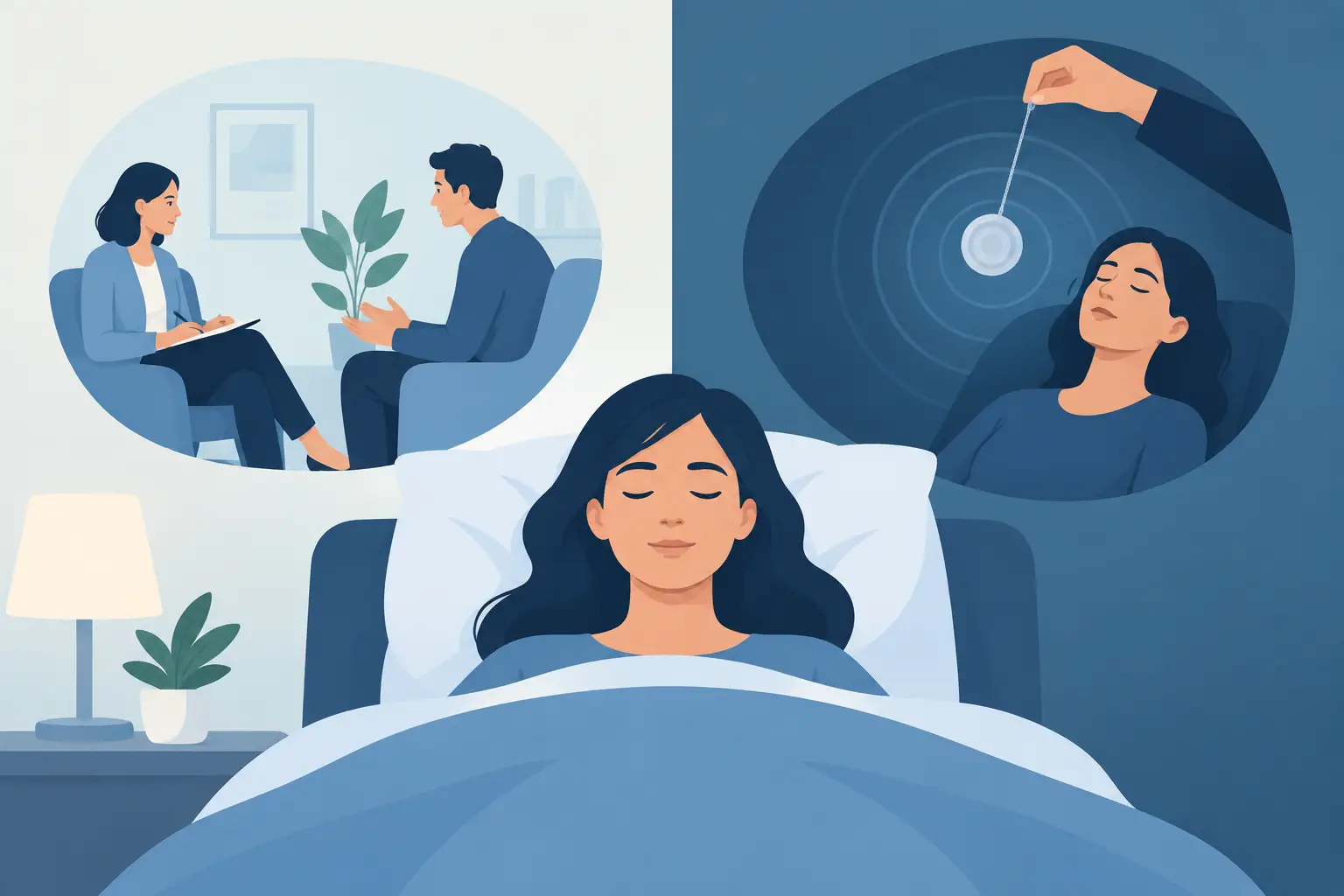
At 3am, insomnia can make even the most capable person feel as though they have lost control of their own mind. You may be exhausted, yet alert to every sound; worried about tomorrow, yet unable to stop replaying it. This insomnia hypnosis review looks at where hypnotherapy may fit when sleep has become difficult, what a thoughtful course of sessions involves, and what realistic progress can look like.
Insomnia is not simply a shortage of sleep. For many people, it becomes a learned pattern of pressure, anticipation and heightened alertness around bedtime. The more you try to force sleep, check the clock or calculate how you will cope the next day, the more awake your nervous system can become.
What insomnia hypnosis is really designed to address
Hypnosis is not sleep itself, and it does not involve someone taking control of your mind. In a therapeutic setting, it is a focused, calm state in which you remain aware and able to respond. The aim is to help reduce the mental and physical arousal that can keep insomnia going, while working with the thoughts, habits and emotional patterns that surround it.
A good approach to insomnia rarely consists of a generic recording intended to send you to sleep. A recording may be useful as part of a routine, but persistent sleep problems usually need more careful attention. The question is not only, “Why can’t I sleep?” It is also, “What happens in my mind and body when I realise I am not sleeping?”
When clients visit our practice, they could be feeling worn down by weeks or months of broken nights, anxious about work, and frustrated that tiredness has started to affect their mood, concentration or relationships. Some have tried changing their routine, reducing caffeine or using sleep apps. Others have already tried CBT and are looking for a more individual way to work with the emotional charge attached to sleep.
An insomnia hypnosis review: what should you look for?
The most useful insomnia hypnosis review is not one that promises a fixed number of hours by a certain date. Sleep varies from person to person, and a credible practitioner will not guarantee an outcome. Instead, look for an approach that assesses your particular pattern and gives you practical tools between sessions.
A thorough initial conversation should explore when the problem began, what a typical night looks like, whether there are early waking, difficulty falling asleep or frequent waking, and how you respond when sleep does not come. It should also consider stress, anxiety, low mood, shift work, alcohol, medication, pain, hormonal changes and major life events.
This matters because two people can both say, “I have insomnia”, while needing very different support. One may be caught in a cycle of work pressure and late-night rumination. Another may fall asleep easily but wake at 4am with a rush of anxious thoughts. Someone else may have developed a fear of bedtime after a long period of poor sleep.
All people are different, but we see some who may be outwardly successful and highly organised during the day, then find that their mind becomes busiest as soon as the house is quiet. Their sleep difficulty is not a failure of discipline. It can be a sign that the body has become used to staying on guard.
How a tailored course of hypnotherapy may work
In cognitive hypnotherapy, sessions are shaped around the person rather than a fixed script. Hypnotic work may help the mind practise a calmer response to bedtime and wakefulness. Alongside this, therapy can examine unhelpful beliefs such as “If I do not get eight hours, tomorrow will be a disaster” or “I must fall asleep now”.
Those thoughts are understandable, particularly when you have responsibilities the next day. Yet they can add urgency to a situation that needs less effort, not more. Treatment may use gentle imagery, relaxation work, cognitive techniques and practical changes that make the bedroom feel less like a place of assessment.
In our practice, we often see clients who…
have become expert at monitoring themselves: checking whether they feel sleepy enough, noticing every wake-up, and judging the next day before it has begun. Part of the work is helping them step out of that monitoring loop. This is not about pretending tiredness is unimportant. It is about reducing the threat response that makes a difficult night harder.
Depending on the person, complementary methods may also be useful. For example, simple techniques for settling physical tension can help where stress is held in the body. NLP-informed work may be used to explore habitual thought patterns, while relaxation practice can give clients something concrete to use when their mind starts racing. The method should follow the problem, not the other way round.
What happens outside the session matters
Hypnotherapy is usually more effective when it is paired with small, realistic changes between appointments. These are not rigid rules designed to make you perform sleep perfectly. They may include creating a clearer boundary between work and bed, reducing clock-watching, practising a relaxation exercise earlier in the evening, or responding differently after a poor night.
For a London professional, this might mean recognising that replying to emails at 10pm keeps the working day psychologically open. It might mean building in a short decompression period after a late commute rather than expecting the mind to switch off immediately. The right routine is one you can actually maintain, including on busy weeks.
What results are realistic?
Some people notice an early sense of calm or feel less apprehensive about going to bed after only a few sessions. For others, progress is steadier: they may still wake in the night, but stop spiralling when they do. That change can be significant, because reduced anxiety around wakefulness often allows sleep to become more natural over time.
It is also normal for sleep to fluctuate. A stressful deadline, illness, travel or family concern can interrupt a settled routine. The aim is not to create perfect sleep forever. It is to help you recover your confidence that a poor night can be managed without turning into a prolonged cycle.
Be wary of any service that treats hypnosis as a replacement for appropriate medical assessment. Snoring with pauses in breathing, waking gasping, severe daytime sleepiness, symptoms of depression, unexplained pain, medication changes or persistent insomnia all deserve discussion with a GP or relevant clinician. Hypnotherapy can be supportive, but it should sit alongside medical care where needed.
Is hypnosis right for your insomnia?
It may be worth considering if your sleep problem is closely linked with stress, anxiety, racing thoughts, bedtime dread or a pattern that has continued after the original trigger has passed. It can also suit people who want a one-to-one approach and are willing to practise techniques between sessions.
It may not be the only answer if there is an untreated physical sleep disorder, acute mental health crisis or a medication-related cause. A responsible practitioner will be comfortable saying this and helping you consider the appropriate next step. The point is not to fit everyone into hypnotherapy; it is to understand what is maintaining the problem and choose support accordingly.
Poor sleep can narrow your world surprisingly quickly. Seeking help is not an admission that you are unable to cope. It is a practical decision to address a pattern that is taking too much from your days as well as your nights.
If you’re based in London and would like to explore this further, you can get in touch with us.