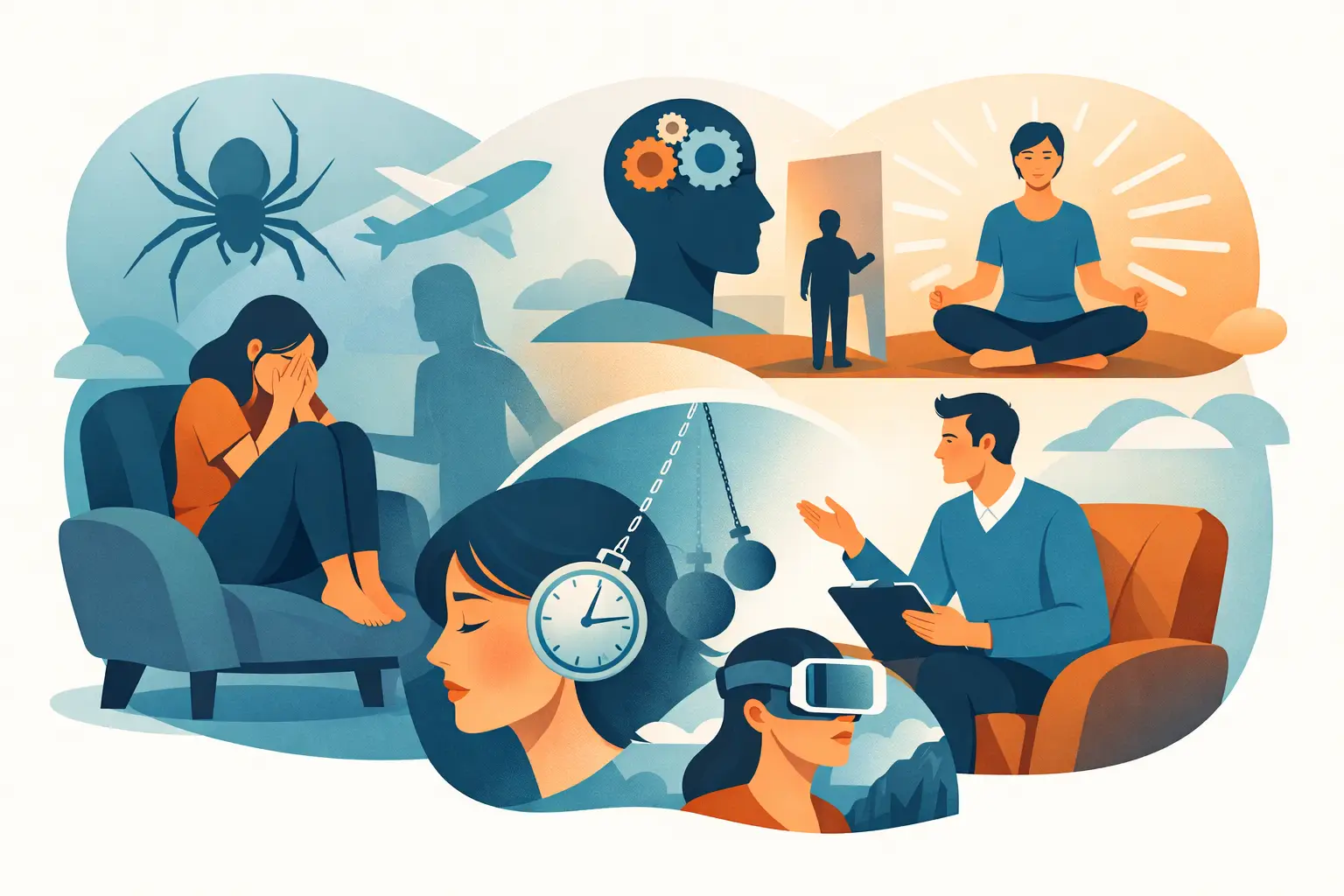
A phobia can make ordinary situations feel disproportionately difficult. You may know, logically, that a lift, a flight, a spider or a medical appointment is unlikely to harm you, yet your body reacts as though there is immediate danger. The question, “is hypnosis effective for phobias?”, usually comes after someone has spent a long time avoiding situations, planning around them or trying to push through the fear alone.
Hypnotherapy can be an effective approach for some people with phobias, particularly when it is tailored to the person rather than applied as a standard script. It is not about making you do something against your will, nor is it a quick fix that erases every uncomfortable feeling. The aim is to reduce the automatic fear response, understand what maintains it and help you approach the situation with more choice and control.
Is hypnosis effective for phobias?
The honest answer is that it depends on the phobia, its history and the individual. Some people notice a substantial shift in only a few sessions. Others need more time, especially if the phobia is linked to a traumatic event, general anxiety, panic attacks or several years of avoidance.
A phobia is more than a dislike. It is a learned alarm response. The mind identifies a particular object, place or situation as threatening, and the nervous system reacts quickly: a racing heart, shallow breathing, nausea, dizziness, shaking or an urgent need to escape. Avoidance brings short-term relief, but it can quietly reinforce the belief that the feared thing was dangerous and that avoidance was necessary.
Hypnosis uses focused attention and relaxation to help a person work with these patterns in a calmer state. You remain aware and in control throughout. Rather than being asleep or unconscious, most clients describe hypnosis as feeling settled, absorbed and less distracted by the usual stream of thoughts.
In this state, therapeutic work may involve changing the meaning attached to a feared situation, rehearsing a more helpful response or addressing memories and beliefs that have kept the fear in place. For example, someone with a fear of flying may understand that flying is statistically safe, but still picture disaster whenever they book a trip. Therapy can help separate the present-day experience from the old internal alarm.
Why a tailored approach matters
When clients visit our practice, they could be feeling embarrassed by the scale of their fear. A successful professional may manage demanding work, family commitments and social occasions, yet be unable to travel by Tube, speak in meetings, have a blood test or visit the dentist. Phobias do not reflect weakness or a lack of intelligence. They are often persistent because the reaction is automatic.
In our practice, we often see clients who have already tried to reason their way out of a phobia. They may have read about the issue, watched videos, accepted reassurance from friends and even forced themselves into difficult situations. These efforts can be useful, but they do not always reach the emotional and physical response that takes over in the moment.
A good assessment should look beyond the label of the phobia. Is the central fear of losing control, being trapped, feeling judged, becoming ill or having a panic attack in public? Has the fear always been present, or did it begin after a particular incident? Does the person avoid only one situation, or has their world become smaller in several ways?
These details shape the work. Cognitive hypnotherapy may be combined with practical anxiety-management techniques, elements of NLP, EFT where appropriate, and carefully planned behavioural steps. The purpose is not to make someone tolerate overwhelming distress. It is to build a steadier response in manageable stages.
Hypnotherapy and gradual exposure
For many specific phobias, gradual exposure is an important part of treatment. This means approaching the feared situation in a planned, supported way rather than avoiding it completely or forcing a dramatic confrontation. Hypnotherapy can complement this process by helping clients prepare mentally, practise calming skills and challenge the prediction that they will be unable to cope.
Take a fear of flying. A person might begin by discussing the journey without becoming overwhelmed, then visualise arriving at the airport calmly, listen to relaxation audio between sessions, visit an airport if practical and eventually take a short flight. The pace should be realistic. Success is not measured by feeling no anxiety at all, but by being able to do what matters while responding differently to anxiety.
All people are different, but we see some who may be surprised by how quickly the body begins to settle once they stop treating every anxious sensation as proof of danger. Others need longer to develop trust in the process. Both responses are valid, and neither should be judged against another person’s experience.
What evidence and experience can tell us
Research into hypnosis for phobias is promising but varied. Studies differ in the types of phobia examined, the methods used and whether hypnosis is combined with other therapies. This means it would be misleading to claim that hypnosis works for everyone or that it should replace all established psychological support.
Approaches based on cognitive behavioural therapy and exposure have a strong evidence base for many phobias. Hypnotherapy may be especially useful as an integrative option when anxiety is intense, avoidance feels entrenched or a person has not connected with a purely cognitive approach. It can also give clients practical ways to regulate their nervous system between sessions.
For more complex presentations, such as trauma-related fears, severe panic, depression or symptoms that may involve physical health concerns, treatment needs careful consideration. Your hypnotherapist should be appropriately qualified, clear about the limits of their work and willing to recommend liaison with a GP, psychologist or other healthcare professional where needed.
What a course of treatment may involve
The first session is usually about understanding the problem in context, not rushing straight into hypnosis. You should have space to explain what happens before, during and after the phobic response, what you have tried already and what you would like to be able to do differently.
From there, sessions may include hypnosis, guided mental rehearsal, work with unhelpful beliefs, breathing and grounding techniques, and a plan for gradual real-world practice. You may also be given simple exercises or a relaxation recording to use at home. These are not homework for homework’s sake. Repetition helps the mind and body become familiar with a calmer pattern outside the therapy room.
Progress is often practical. It may look like booking the appointment you have delayed, taking a lift without immediately leaving, sitting through a dental check-up, travelling further from home or saying yes to a work opportunity that used to feel impossible. There can still be nerves. The difference is that the fear no longer gets the final say.
Choosing support for a phobia
If you are considering hypnotherapy, look for a practitioner who takes time to assess your situation and explains how they work. Be cautious of promises to cure a lifelong phobia in one session. Some straightforward fears do respond quickly, but ethical therapy allows for individual differences and gives you a clear, realistic plan.
It is also worth thinking about your own goal. “I never want to feel anxious again” can place a great deal of pressure on every step. A more useful goal might be, “I want to travel to see my family”, “I want to attend medical appointments without cancelling” or “I want to feel able to accept a promotion that involves presenting”. Meaningful goals give therapy a direction and make progress easier to recognise.
A phobia can be exhausting because it asks you to stay on guard against something that may only appear occasionally. With the right support, it is possible to reduce that sense of vigilance and build confidence through experience, rather than simply hoping the fear will disappear on its own.
“If you’re based in London and would like to explore this further, you can get in touch with us.”