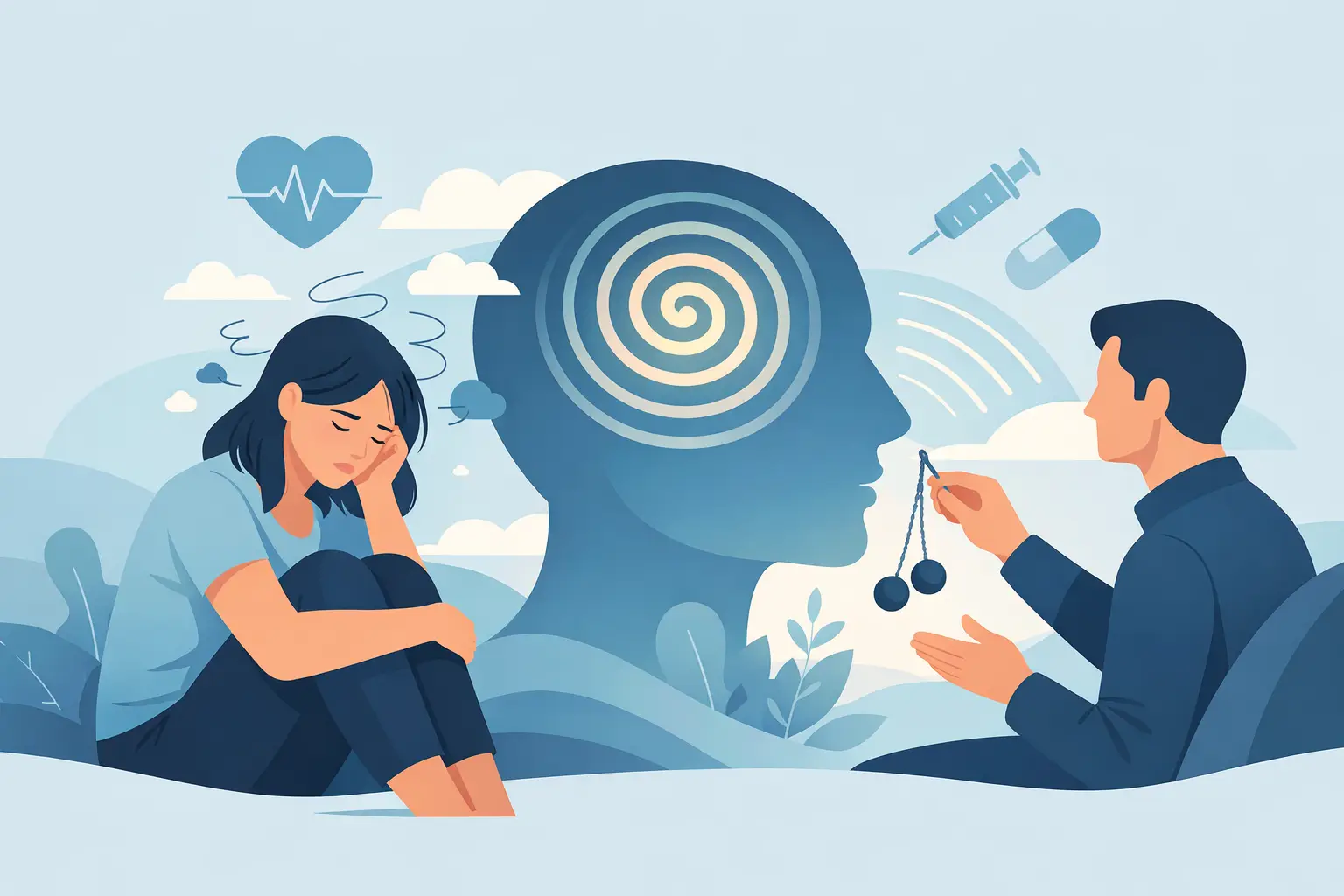
Lying awake at 2am with a busy mind can feel oddly lonely, especially when you still have a full working day ahead. For many people, hypnotherapy for insomnia adults consider is not really about sleep alone. It is about tension, overthinking, anticipation, and the frustration of trying hard to do something that should happen naturally.
Insomnia in adulthood often develops its own pattern. You may first struggle during a stressful period, then find that even when life settles down, sleep does not. The bed starts to feel like a place where you monitor yourself, clock-watch, and brace for another poor night. That is often the point at which people begin looking for a different kind of support.
Why insomnia can become a cycle
Poor sleep is rarely just one thing. For some adults, it begins with stress at work, family pressures, burnout, grief, menopause, health anxiety, or a period of low mood. For others, there is no single dramatic trigger. Sleep simply becomes lighter, more broken, and less reliable over time.
The difficulty is that insomnia tends to feed on itself. A bad night leads to worry about the next one. That worry creates physical and mental alertness. You start checking whether you are sleepy enough, whether you will cope tomorrow, whether something is wrong with you. The more effort you put into forcing sleep, the less natural it feels.
When clients visit our practice, they could be feeling exhausted but also strangely wired. Many describe being able to function outwardly – going to work, replying to messages, attending meetings – while privately feeling frayed, irritable, and less able to cope. In high-functioning adults, insomnia is often hidden in plain sight.
How hypnotherapy for insomnia adults often works
Hypnotherapy is not sleep itself, and it is not a magic switch. It is a way of helping the mind and body move out of a habitual state of alertness. In practical terms, that may involve reducing the anxiety around sleep, changing the thought patterns that keep you awake, and helping you respond differently to bedtime, night waking, or the fear of not sleeping.
A good therapeutic approach will look at more than the surface symptom. If your mind races at night, we would want to understand what it is doing during the day as well. If your body stays tense, we would consider your stress baseline, not just your bedtime routine. If insomnia has become linked with dread or self-pressure, that relationship with sleep needs attention too.
In our practice, we often see clients who have already tried the usual advice. They have cut down caffeine, bought the eye mask, changed the mattress, listened to podcasts, and read endless articles on sleep hygiene. Sometimes these steps help a little. Sometimes they become one more thing to get right, which can add pressure rather than relieve it.
This is where tailored hypnotherapy can be useful. Rather than applying a generic script, sessions can be shaped around the pattern you are actually experiencing. That may include cognitive hypnotherapy techniques, elements of NLP, relaxation training, or practical strategies you can use between sessions.
What happens in sessions
The first step is usually understanding the pattern clearly. Are you struggling to fall asleep, waking in the night, waking early, or all three? Has this been going on for weeks, months, or years? Is stress the main issue, or does your insomnia seem linked to anxiety, trauma, health worries, or a relentless inner critic?
From there, the work is usually focused and collaborative. Hypnosis itself is a natural state of absorbed attention, not a loss of control. Most clients describe it as deeply relaxing, though that is not the only point of it. In that state, it can be easier to shift unhelpful associations, calm the nervous system, and rehearse a different response to bedtime and sleep disruption.
All people are different, but we see some who may be lying in bed mentally preparing for tomorrow, replaying awkward conversations, or scanning their body for signs that sleep is not coming. Others are stuck in a cycle of resentment and panic about being awake. Those patterns matter, because insomnia is often maintained by what the mind learns to expect.
Hypnotherapy can help interrupt that learning. It may support you to feel safer at night, less reactive to being awake, and less caught in the spiral of trying to make sleep happen. For some people, that shift is quite noticeable. For others, it is more gradual, with sleep becoming steadier over a number of weeks.
What hypnotherapy for insomnia adults can and cannot do
It helps to be realistic. Hypnotherapy is not a substitute for medical care where that is needed. Persistent insomnia can sometimes sit alongside sleep apnoea, medication effects, chronic pain, hormone changes, depression, or other health concerns. If symptoms suggest a medical issue, that should be properly assessed.
It is also worth saying that not every adult with insomnia needs the same approach. If your sleep problem is mainly behavioural and mild, small routine changes may be enough. If it is strongly linked to anxiety, unresolved stress, or a long-standing state of hypervigilance, therapy may be more useful. It depends on what is driving the problem now, not only what started it.
What hypnotherapy can do well is work with the psychological and physiological side of sleeplessness. It can reduce anticipatory anxiety, soften overthinking, and help the body spend less time in a stress response. For adults whose sleep has become entangled with pressure, fear, and mental overactivity, that can be highly relevant.
Why adults in London often struggle with sleep differently
Urban professional life can keep the nervous system switched on for longer than people realise. Long hours, screen exposure, commuting, constant availability, and the expectation to perform well can all create a background level of activation that does not disappear when your head hits the pillow.
For some adults, insomnia becomes part of a wider pattern. You may be productive, capable, and outwardly calm, yet internally running on adrenaline. That does not always look dramatic. Sometimes it shows up as waking at 4am with a clenched jaw and a mind that instantly starts planning.
This is one reason one-to-one work matters. Sleep problems are often described in generic terms, but they are lived very personally. The executive who cannot switch off after late-night emails may need something different from the parent whose sleep became fragile after months of stress. The adult who has had insomnia since university may need something different again from someone whose sleep changed after a health scare.
How many sessions does it take?
There is no honest fixed answer. Some people notice a shift quite quickly, particularly if insomnia is recent and clearly linked to stress. Others need longer, especially if poor sleep has been established for years or forms part of a broader anxiety pattern.
What matters is whether the work is targeted. Sleep usually improves not because someone was told to relax, but because the reasons they stay mentally and physically activated are being addressed properly. That is why a bespoke approach tends to be more useful than a one-size-fits-all recording or generic hypnosis script.
Clients also tend to do better when they have practical tools between sessions. That might mean a relaxation method, a way to respond to racing thoughts, or a different strategy for handling night waking without escalating into panic. The aim is not dependency on therapy. It is helping you build a more reliable internal response.
A calmer relationship with sleep
For many adults, the most important change is not simply sleeping longer. It is no longer feeling at war with bedtime. When the anxiety around sleep starts to reduce, the body often becomes more willing to settle. You may still have the occasional poor night, but it stops feeling like a catastrophe.
That is often a more useful goal than chasing perfect sleep. Most healthy sleepers still have off nights. The difference is that they do not spiral in response to them. Therapy can help you move closer to that pattern – less fear, less effort, and a steadier sense that sleep can return naturally.
If you’re based in London and would like to explore this further, you can get in touch with us.