A full inbox, a meeting you have not had time to prepare for, and another message marked urgent can leave your body reacting as though you are under immediate threat. If you are wondering how to calm work stress, it helps to begin with this: the aim is not to become indifferent to your responsibilities. It is to reduce the level of internal alarm so that you can think clearly, respond proportionately and recover properly.
Work stress is often mistaken for simply having too much to do. Workload matters, of course, but the strain usually comes from a combination of high demands, low control, unclear expectations and the feeling that there is no safe point at which to stop. This can affect people in senior roles, those working from home, business owners and anyone trying to appear capable while feeling close to their limit.
Notice when pressure has become a stress response
There is a difference between a busy week and a nervous system that has been running on high alert for months. You may notice that you wake already thinking about work, replay conversations on the commute home, or feel unable to relax even when you have finished for the day. Some people become irritable or withdrawn. Others keep working later because stopping makes them feel more anxious.
When clients visit our practice, they could be feeling competent and successful on the surface while privately struggling with poor sleep, a tight chest, headaches, digestive discomfort or a constant sense of dread before Monday morning. These are not signs of weakness. They are often signs that the mind and body have learned to stay prepared for the next demand.
The first useful shift is to stop treating every stress signal as an instruction to work harder. A racing mind may be asking for a pause, a clearer priority or a more realistic boundary. If you only answer it with another coffee, another late night or more effort, the pattern can become self-reinforcing.
How to calm work stress in the moment
When pressure spikes, reasoning with yourself alone may not be enough. Stress affects breathing, muscle tension and attention before you have had time to form a calm thought. Start with your body.
Try placing both feet on the floor and lengthening your out-breath slightly. There is no need to force a deep breath, which can sometimes feel uncomfortable when you are anxious. Breathe in gently, then allow the exhale to be a little slower and longer. Do this for a minute or two while noticing three ordinary things around you, such as the feel of the chair, the temperature of the room or a sound in the background.
This is not about pretending the deadline has disappeared. It is a way of signalling to your system that, in this exact moment, you are safe enough to choose what happens next. From there, ask one practical question: what is the next action that would genuinely move this forward? Often it is a short reply, a request for clarification, or ten focused minutes on the task rather than an attempt to solve everything at once.
If you are in a meeting, you may not be able to leave the room or practise a longer exercise. A quieter version can still help: lower your shoulders, press your feet into the floor, and let yourself pause for one breath before answering. That small gap can reduce the tendency to speak too quickly, agree to unrealistic requests or react defensively.
Reduce the conditions that keep stress going
A calming technique is useful, but it will have limited effect if your working day repeatedly tells your brain that everything is urgent. Look at the pattern around the stress, not only the feeling itself.
For some people, switching off notifications for short periods makes a meaningful difference. For others, the key issue is unclear priorities. If every task is treated as equally important, your mind has no way to settle. A brief conversation with a manager or colleague about what can wait may feel difficult, yet it is often more productive than silently carrying an impossible list.
It can also help to create a clear end-of-day ritual. This does not have to be elaborate. Write down what has been completed, identify the first task for tomorrow, then close the laptop or leave the desk. If you work from home, a short walk around the block or changing clothes can create a boundary that the commute once provided.
All people are different, but we see some who may be especially affected by work stress when they hold themselves to very high standards. They may find it hard to delegate, fear disappointing others or believe that rest must be earned. In these cases, the problem is not poor time management. It is often the underlying belief that being valued depends on constant performance.
Look at the thoughts behind the workload
Stressful thoughts can sound convincing because they often contain an element of truth. You may have a demanding job. You may be responsible for a team, a client or a significant project. The question is whether your mind is adding conclusions that make the pressure harder to manage.
Common examples include: “If I make one mistake, people will lose confidence in me,” “I have to deal with this myself,” or “I cannot relax until everything is finished.” These thoughts create a standard that no working day can meet. There will always be another email, another request and another unfinished task.
Rather than replacing them with overly positive statements, try a more balanced response. You might say: “This matters, but I can deal with one part at a time,” or “I can ask for help before this becomes unmanageable.” A believable alternative is more useful than a phrase that feels false.
In our practice, we often see clients who have become so used to functioning under pressure that calm itself feels unfamiliar. When they finally have a quiet evening, their thoughts speed up or they feel guilty for not doing more. This is understandable. The mind may have associated vigilance with safety and achievement for a long time. Learning to settle involves practising a different response repeatedly, not forcing yourself to relax on command.
When work stress affects sleep, confidence or health
Persistent work stress rarely stays neatly inside working hours. It may show up as insomnia, increased alcohol use, emotional eating, low mood, panic symptoms, IBS flare-ups or a loss of confidence in situations that once felt manageable. You may start avoiding presentations, putting off difficult conversations or worrying excessively about being judged.
At this point, it is worth taking the problem seriously rather than waiting for a holiday to fix it. Time away can provide relief, but if the same triggers and thought patterns return on Monday, the nervous system often returns to its old state quickly.
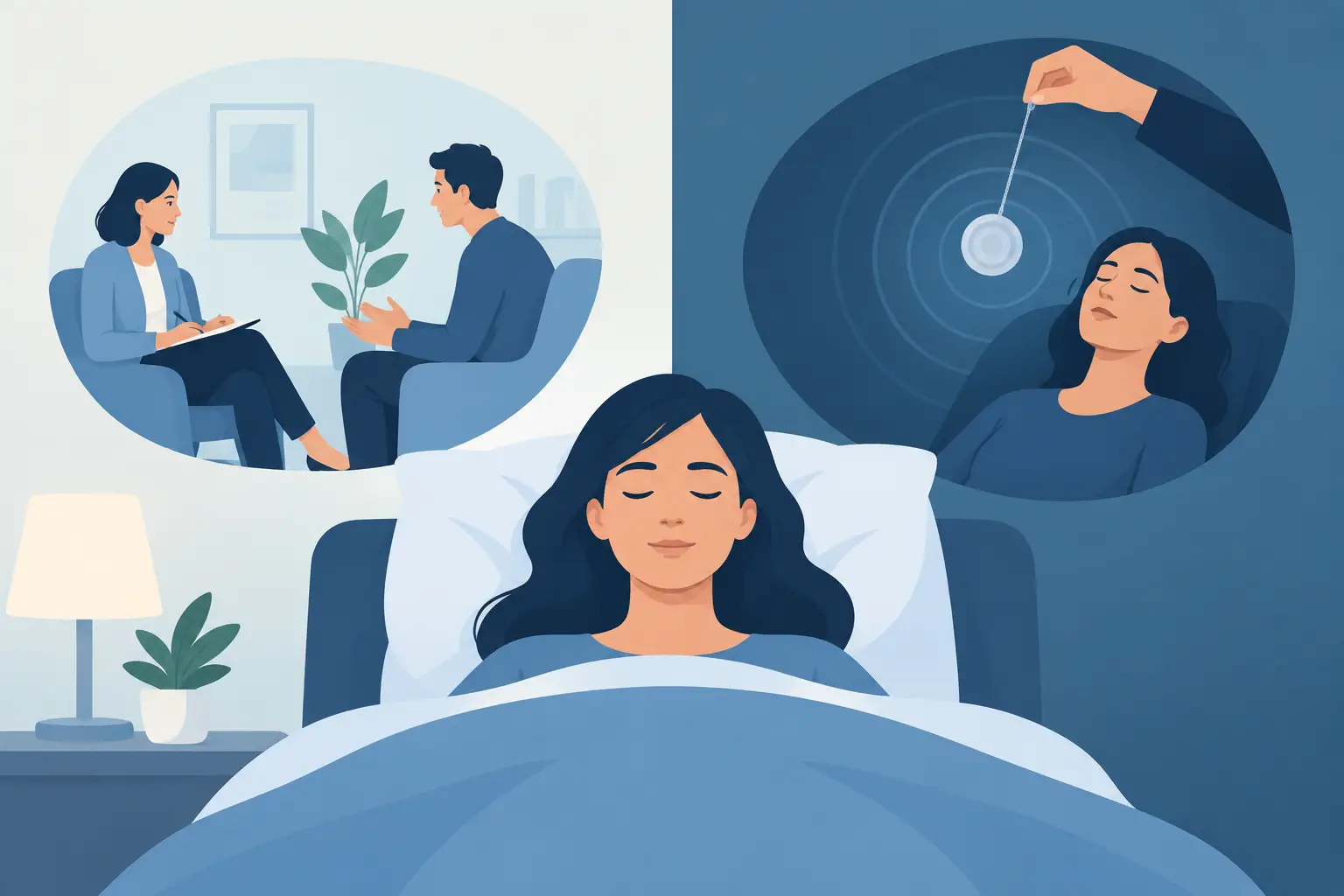
Support may involve practical changes at work, a conversation with your GP, or therapy that explores why certain situations trigger such a strong response. Cognitive hypnotherapy can be helpful for people who understand their stress intellectually but still find their body reacting automatically. Sessions can explore the learned patterns behind anxiety and pressure, while offering tailored ways to respond differently outside the therapy room.
Approaches such as relaxation work, cognitive techniques and, where appropriate, methods including NLP or EFT are not a substitute for addressing an unreasonable workload or a harmful workplace. Sometimes the healthiest step is to seek clearer support, alter your role or recognise that a particular environment is no longer sustainable. Therapy can help you make that decision from a steadier place rather than from exhaustion.
Give recovery the same status as performance
Recovery is not a reward for finishing every task. It is part of being able to do your work well over time. That may mean taking a proper lunch break more often, protecting one evening each week from work messages, or deciding that your best effort on a routine task is enough.
Start with one change that feels manageable and observe what happens for a fortnight. The goal is not a perfectly calm working life. Most worthwhile roles bring periods of pressure. The goal is to recognise pressure early, respond with more choice, and avoid letting stress become the background state of your life.
If you’re based in London and would like to explore this further, you can get in touch with us.