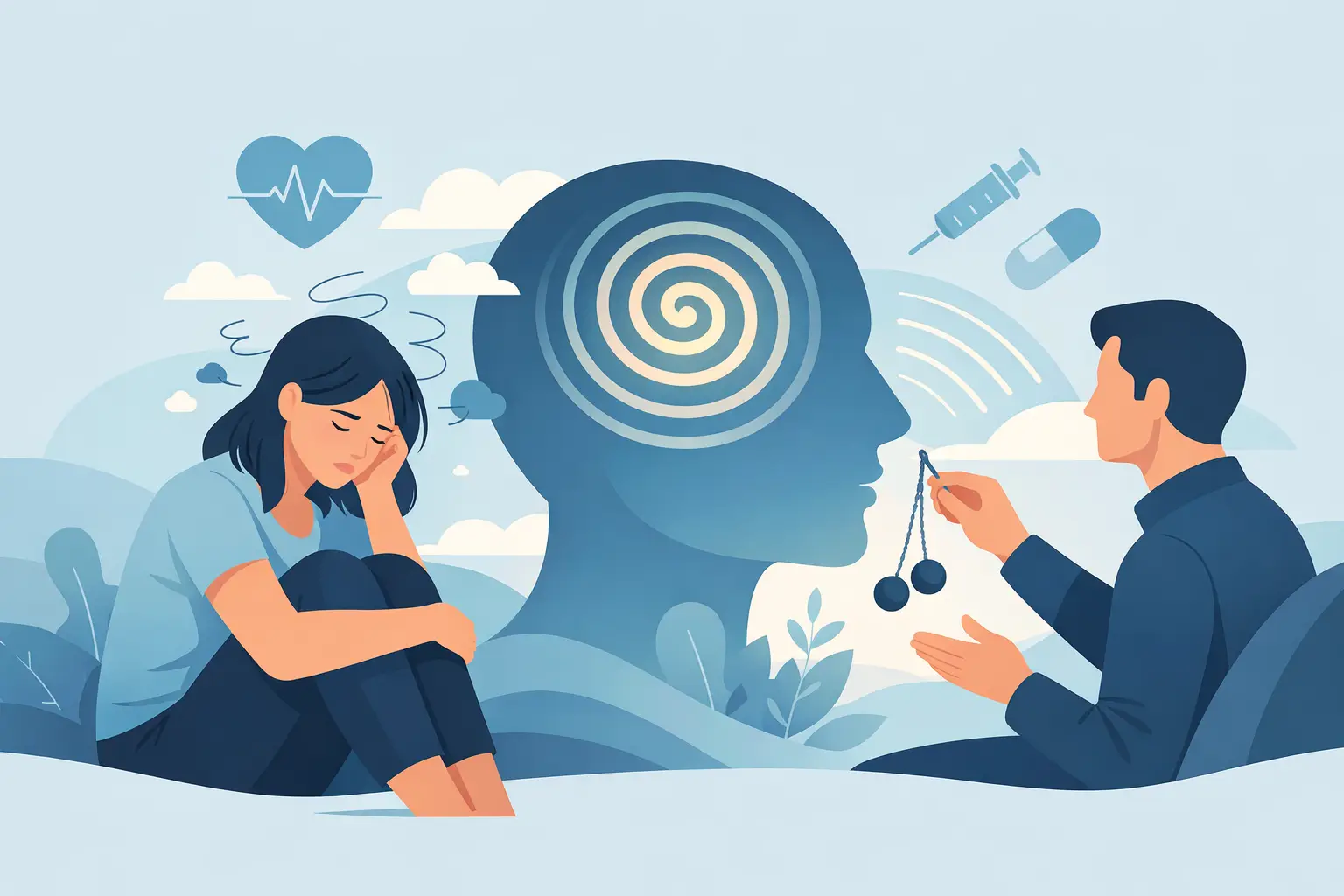
A demanding week at work, a poor night’s sleep, another racing-heart journey on the Tube – anxiety can begin to feel like something you must simply manage around. The question of medication versus hypnotherapy for anxiety often comes up when the strain is affecting concentration, relationships, sleep or confidence, and you want a realistic way forward.
There is no universal right answer. Medication can be a valuable form of support, particularly when symptoms are severe or persistent. Hypnotherapy can help people understand and change the patterns that keep anxiety active. For some, the most helpful plan includes both, alongside support from a GP or other healthcare professional.
What anxiety can look like behind a busy life
When clients visit our practice, they could be feeling outwardly capable while privately exhausted. They may be keeping up with meetings, family responsibilities and social commitments, yet spending much of the day anticipating what might go wrong.
Anxiety is not always a dramatic panic attack. It can show up as a tight chest before presentations, constant checking of emails, waking at 3am with a busy mind, avoiding travel, or feeling unable to relax even on a quiet evening. Some people notice physical symptoms first, such as stomach discomfort, headaches, shallow breathing or insomnia.
The symptoms are real, but they do not always mean that you are in danger. Anxiety is often the mind and body trying too hard to protect you. Treatment aims to reduce that alarm response and give you more choice in how you respond.
How anxiety medication may help
Medication for anxiety is usually prescribed by a GP or psychiatrist. The type offered will depend on your symptoms, medical history, other medications and whether low mood, panic, sleep problems or another condition is also present.
Some medications are intended to reduce anxiety over time, while others may be considered for short-term relief in particular circumstances. For people whose anxiety has become overwhelming, medication can create enough breathing space to sleep, function and engage with therapy. This can be a meaningful first step, not a failure to cope.
It also has limitations. Medication does not necessarily identify the situations, learned responses or beliefs that trigger your anxiety. Some people experience side effects, and finding the right medication may take time. Others prefer not to take medication, or find that it reduces symptoms without fully resolving the fear of speaking up, travelling alone, being judged or losing control.
Never stop, start or alter prescribed medication without speaking to the clinician who prescribed it. This is particularly important with medication that needs to be reduced gradually.
What hypnotherapy for anxiety involves
Clinical hypnotherapy is not about losing control or being made to do anything against your wishes. It is a focused, relaxed state in which you can work more directly with thoughts, emotional responses and habitual patterns. You remain aware and able to respond throughout.
At City of London Hypnotherapy, sessions are tailored rather than delivered as a standard script. We take time to understand what happens before anxiety rises, what you tell yourself in those moments, what your body does, and what you have already tried. The work may draw on cognitive hypnotherapy and practical approaches such as NLP, EFT or relaxation methods, depending on what is appropriate for you.
In our practice, we often see clients who understand logically that they are safe, but whose body still reacts as if an old threat is happening now. A professional who knows they are well prepared may still freeze before a presentation. Someone who has flown many times may become distressed at the thought of boarding a plane. These responses are not irrational in a simplistic sense. They are patterns that have become automatic.
Hypnotherapy can help you rehearse a different response, reduce the intensity of the alarm and build practical techniques for use between sessions. This may include changing anticipatory thinking, working with a particular memory or trigger, learning to settle the nervous system, and developing a more useful internal response to pressure.
Medication versus hypnotherapy for anxiety: key differences
The central difference is the role each approach plays. Medication primarily aims to reduce symptoms through its effect on the body and brain. Hypnotherapy aims to work with the mental, emotional and behavioural processes that contribute to anxiety.
That distinction matters, but it should not become an either-or argument. If you are struggling to get out of bed, having frequent panic attacks or feeling unable to keep yourself safe, medical support should be a priority. A GP can assess physical factors, discuss treatment options and refer you to appropriate services where needed.
If your anxiety is linked to a specific pattern – public speaking, work pressure, social situations, flying, health worries, sleep or an upsetting past experience – hypnotherapy may offer a focused route to understanding and changing that pattern. It can be particularly useful for people who are tired of analysing their anxiety but want a practical, individual process.
All people are different, but we see some who may be taking medication and still want help with the underlying triggers. Others have tried talking therapy and want a more experiential approach that includes the body’s response, not only the story they can tell about it.
When a combined approach may make sense
For some people, medication makes therapy more accessible. When anxiety is less intense, it may be easier to practise new responses, face avoided situations gradually and get restorative sleep. In turn, therapeutic work may help a person feel less dependent on avoidance and better equipped to discuss future medication decisions with their prescriber.
A combined approach needs sensible communication. Hypnotherapy is not a replacement for medical assessment, and a hypnotherapist should be clear about the boundaries of their role. If there are concerns about severe depression, suicidal thoughts, psychosis, substance dependence, trauma symptoms or a significant change in mental state, medical or specialist support is essential.
There is also no need to force a label onto your experience. You may not be looking for a long-term course of medication or a lengthy therapeutic process. You may simply need help with a particular fear, recurring physical anxiety symptoms or a stressful period that has tipped your coping strategies out of balance.
Choosing the support that feels appropriate
A useful starting point is to ask what you need most right now. Do you need urgent relief from symptoms that are making daily life unmanageable? Do you want to work on a long-standing pattern? Are you concerned about side effects, or have you already found medication helpful but incomplete?
It is also worth considering the quality of the therapeutic relationship. Anxiety often involves feeling judged, rushed or misunderstood. A consultation should give you space to explain what is happening and ask how the practitioner would tailor their approach. You should not be promised a fixed outcome or told that one method suits everyone.
The aim is not to eliminate every anxious thought. A degree of anxiety is part of being human and can even sharpen attention. The more useful goal is to stop anxiety from making your decisions for you – whether that means avoiding the presentation, cancelling the journey, lying awake for hours or staying stuck in a pattern that no longer serves you.
“If you’re based in London and would like to explore this further, you can get in touch with us.”